• Home
  • About Us
    • Managing Team
    • Researchers
    • Interns
    • Associates
  • Articles
  • Courses
  • Activities
    • CLSD Reader’s Club
    • Summer Course
    • Photovoice
    • SAELA
    • Community Service
  • Research & Publication
Universitas Gadjah Mada Center for Life-Span Development (CLSD)
Faculty of Psychology
Universitas Gadjah Mada
  • Home
  • About Us
    • Managing Team
    • Researchers
    • Interns
    • Associates
  • Articles
  • Courses
  • Activities
    • CLSD Reader’s Club
    • Summer Course
    • Photovoice
    • SAELA
    • Community Service
  • Research & Publication
  • Beranda
  • SDG 10: BERKURANGNYA KESENJANGAN
  • SDG 10: BERKURANGNYA KESENJANGAN
  • page. 2
Arsip:

SDG 10: BERKURANGNYA KESENJANGAN

Keterlibatan Ayah pada Pengasuhan Anak Usia Dini

ArtikelArtikelArtikel Ilmiah Populer Friday, 21 February 2025

Oleh: Nur Diana Indrawati | Penyunting: Muhammad Ikbal Wahyu Sukron, S.Psi., M.A.

Akhir-akhir ini, jagat media sosial Indonesia sedang gandrung dengan edukasi pengasuhan anak. Menjamurnya akun media sosial tentang edukasi pengasuhan, seperti Tentang Anak, Parentalk.id, Rabbitholeid, dan Momscorner menjadikan ilmu pengasuhan semakin terjangkau bagi semua lapisan masyarakat. Salah satu topik yang sering dibahas akhir-akhir ini adalah mengenai perkembangan anak usia dini. Menjadi orang tua tidak dimulai ketika seorang anak lahir di dunia, tapi dimulai ketika perencanaan kehamilan. Fase kehamilan sampai fase anak usia dini merupakan dasar yang akan menjadi penentu keterampilan dan pembelajaran pada fase berikutnya sampai anak tumbuh dewasa, sehingga permasalahan perkembangan yang dialami pada fase usia dini akan memiliki efek multigenereasi (Black dkk., 2017).


UNICEF (2007) menyatakan bahwa perkembangan anak usia dini merupakan perkembangan dari fase prenatal sampai ke transisi menuju sekolah dasar (usia 7 tahun). Gupta dan Raut (2016) menambahkan bahwa 1000 hari pertama kehidupan merupakan masa yang paling krusial dalam perkembangan anak. Pengasuhan yang responsif dan nutrisi yang tercukupi pada 1000 hari pertama merupakan hal vital yang akan menentukan kesehatan dan kesejahteraan psikologis pada masa yang akan datang (Gupta & Raut, 2016). Menurut Black dkk. (2017), faktor yang mempengaruhi anak untuk mencapai potensi maksimal pada perkembangannya antara lain kesehatan, gizi, rasa aman, pengasuhan yang responsif dan pembelajaran sejak dini. Hal tersebut, salah satunya, bisa dipenuhi dengan memaksimalkan keterlibatan ayah dalam proses pengasuhan anak, yang akan berpengaruh positif pada perkembangan kognitif, bahasa, serta perilaku dan regulasi emosi pada anak (Wang dkk., 2022).


Sayangnya, beberapa penelitian menunjukkan bahwa keterlibatan ayah dalam pengasuhan anak di beberapa negara berkembang masih rendah. Contohnya di pedesaan Pakistan, hanya sedikit ayah yang meluangkan waktu untuk bermain fisik dengan anak dan terlibat dalam pengasuhan anak (Maselko dkk., 2019). Selanjutnya pada penelitian yang dilakukan di 69 negara, ditemukan bahwa ibu melakukan aktivitas stimulasi pada anak usia dini jauh lebih banyak dibandingkan dengan ayah; bahkan ketika dibandingkan dengan orang dewasa lain yang berada di rumah, ayah ditemukan melakukan pengasuhan dengan porsi yang lebih sedikit (Evans & Jakiela, 2024).


Terdapat beberapa faktor penyebab kurangnya keterlibatan ayah dalam pengasuhan anak usia dini, antara lain keterbatasan waktu di rumah, kurangnya pengetahuan terkait pengasuhan, serta sikap terhadap gender, seperti menganggap bahwa tugas mengasuh anak adalah tugas perempuan bukan laki-laki (Jeong dkk., 2023). Faktor lain yang memengaruhi keterlibatan ayah dalam pengasuhan anak usia dini, yaitu keyakinan peran mereka (sebagai ayah, suami, atau pencari nafkah), gejala depresif yang dimiliki oleh ayah, kondisi temperamen anak, gender anak serta faktor sosio demografis, seperti ekonomi dan status pendidikan orang tua (Planalp & Braungart-Rieke, 2016).


Beberapa aktivitas yang bisa dilakukan ayah untuk meningkatkan keterlibatan pengasuhan anak usia dini berupa aktivitas didaktik, seperti menyanyi, membaca, bercerita, dan bermain bersama anak (Wang dkk., 2022). Hofferth (2003) menjelaskan bentuk keterlibatan ayah dalam pengasuhan dengan empat domain, yaitu waktu yang dihabiskan bersama anak, kehangatan (contohnya frekuensi memeluk anak dan memberi tahu anak bahwa mereka mencintainya), kontrol dan pengawasan (seperti penerapan aturan tentang kegiatan seperti makan dan belajar), serta tanggung jawab, yaitu sejauh mana orang tua, baik ayah maupun ibu, melakukan tugas memandikan anak, mendisiplinkan anak, mengantar anak, membeli pakaian untuk anak, dan bermain dengan anak.


Sejauh ini, dibandingkan intervensi yang diberikan kepada Ibu, intervensi untuk meningkatkan keterlibatan ayah dalam pengasuhan anak usia dini masih terbatas. Beberapa penelitian yang mengidentifikasi intervensi untuk meningkatkan keterlibatan ayah dalam pengasuhan anak usia dini, antara lain edukasi tentang perawatan pada bayi, memberi makan bayi, merawat ibu, serta memberikan dorongan dan dukungan terhadap praktik menyusui yang diberikan pada ayah bayi yang baru lahir di Kenya dapat meningkatkan pengetahuan para ayah (Dinga, 2019). Selanjutnya program COACHES (The Coaching Our Acting Out Children: Heightening Essential Skills), yaitu sebuah pelatihan tentang strategi pengasuhan yang diberikan selama enam minggu dan berhasil meningkatkan kalimat pujian dan menurunkan komunikasi negatif pada ayah yang memiliki anak dengan gangguan ADHD (Fabiano dkk., 2021).


Di Indonesia, salah satu gerakan keterlibatan ayah dalam pengasuhan anak usia dini yang cukup masif adalah penggalakan program Ayah ASI yang diprakarsai oleh Shafiq Pontoh dan delapan ayah baru lain pada tahun 2011. Bentuk program dari gerakan ini antara lain edukasi, pusat pertolongan, dan juga media promosi mengenai keterlibatan ayah dalam proses menyusui (Riski, 2017). Gerakan tersebut diinisiasi oleh kegelisahan para pendiri akan minimnya pengetahuan mereka sebagai ayah bagi bayi mereka yang baru lahir.


Kegelisahan seperti ini yang perlu kita perhatikan bersama untuk memunculkan gerakan yang dapat meningkatkan keterlibatan ayah dalam pengasuhan anak usia dini. Ayah seringkali berpikir bahwa tugas utamanya adalah mencari nafkah untuk keluarga. Namun tanpa disadari, pola pikir tersebut yang menjadikan mereka berpikir bahwa mengasuh anak merupakan tugas utama ibu. Di sisi lain, ibu juga jarang memberikan kesempatan bagi Ayah untuk terlibat dalam pengasuhan anak.


Proses pengasuhan yang optimal pada anak usia dini akan menentukan keberhasilan proses perkembangannya sampai usia dewasa. Dibutuhkan peran maksimal ayah dan ibu untuk menunjang keberhasilan pengasuhan anak usia dini. Beberapa faktor penyebab kurangnya keterlibatan ayah dalam pengasuhan anak usia dini, antara lain karena kurangnya pengetahuan terkait pengasuhan, keyakinan terhadap peranan mereka, sikap terhadap gender, serta minimnya kesempatan yang diberikan pada ayah untuk terlibat dalam pengasuhan anak dini. Dengan demikian, penting bagi para ayah untuk meningkatkan pengetahuan terkait pengasuhan anak usia dini mengingat pentingnya peran ayah dalam pengasuhan anak usia dini.

Daftar Pustaka
Black, M. M., Walker, S. P., Fernald, L. C. H., Andersen, C. T., DiGirolamo, A. M., Lu, C., McCoy, D. C., Fink, G., Shawar, Y. R., Shiffman, J., Devercelli, A. E., Wodon, Q. T., Vargas-Barón, E., & Grantham-McGregor, S. (2017). Early childhood development coming of age: science through the life course. The Lancet, 389(10064), 77–90. https://doi.org/10.1016/S0140-6736(16)31389-7
Dinga, L. A. (2019). Effect of father-targeted nutrition education on feeding practices, nutritional status and morbidity among infants in Kisumu East, Kenya. Jomo Kenyatta University.
Fabiano, G. A., Schatz, N. K., Lupas, K., Gordon, C., Hayes, T., Tower, D., Soto, T. S., Macphee, F., Pelham, W. E., & Hulme, K. (2021). A school-based parenting program for children with attention-deficit/hyperactivity disorder: Impact on paternal caregivers. Journal of School Psychology, 86, 133–150. https://doi.org/10.1016/j.jsp.2021.04.002
Gupta, S., & Raut, A. (2016). Early childhood development: Maximizing the human potential. Frontiers in Social Pediatrics. https://doi.org/10.5005/jp/books/12773
Guswandi, F. A. (2021). School starting age and academic performance: An empirical study in Indonesia. Jurnal Perencanaan Pembangunan: The Indonesian Journal of Development Planning, 5(3), 344–362. https://doi.org/10.36574/jpp.v5i3.218
Herbst, M., & Strawiński, P. (2016). Early effects of an early start: Evidence from lowering the school starting age in Poland. Journal of Policy Modeling, 38(2), 256–271. https://doi.org/10.1016/j.jpolmod.2016.01.004
Hofferth, S. L. (2003). Race/ethnic differences in father involvement in two-parent families: Culture, context, or economy? Journal of Family Issues, 24(2), 185–216. https://doi.org/10.1177/0192513X02250087
Maselko, J., Hagaman, A. K., Bates, L. M., Bhalotra, S., Biroli, P., Gallis, J. A., O’Donnell, K., Sikander, S., Turner, E. L., & Rahman, A. (2019). Father involvement in the first year of life: Associations with maternal mental health and child development outcomes in rural Pakistan. Social Science and Medicine, 237, 112421. https://doi.org/10.1016/j.socscimed.2019.112421
Planalp, E. M., & Braungart-Rieker, J. M. (2016). Evidence from the ECLS-B. J Fam Psychol, 30(1), 135–146. https://doi.org/10.1037/fam0000156.Determinants
Riski, P. (2017). Fathers and Father Involvement in Indonesia : A Pilot Study Exploring the Community of Breastfeed-Supporthing Fathers (Ayah ASI). https://doi.org/10.13140/RG.2.2.10698.79042
Wang, L., Li, H., Dill, S. E., Zhang, S., & Rozelle, S. (2022). Does paternal involvement matter for early childhood development in rural China? Applied Developmental Science, 26(4), 741–765. https://doi.org/10.1080/10888691.2021.1990061

Module 3: Thematic Explorations of Contextual Research and Intervention on Life-Span Development

Artikel Liputan KegiatanBlogEventSummer Course Tuesday, 19 November 2024

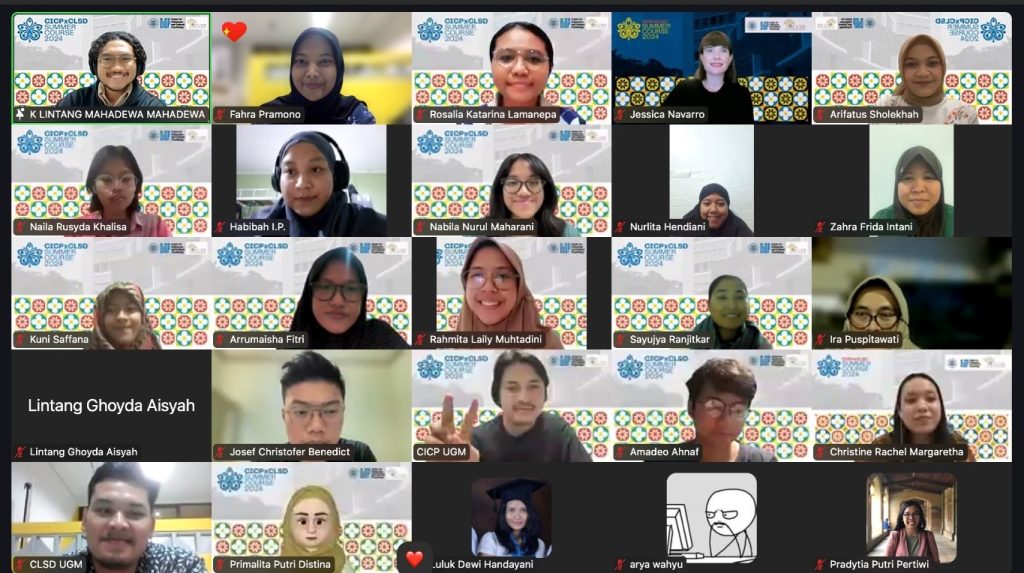
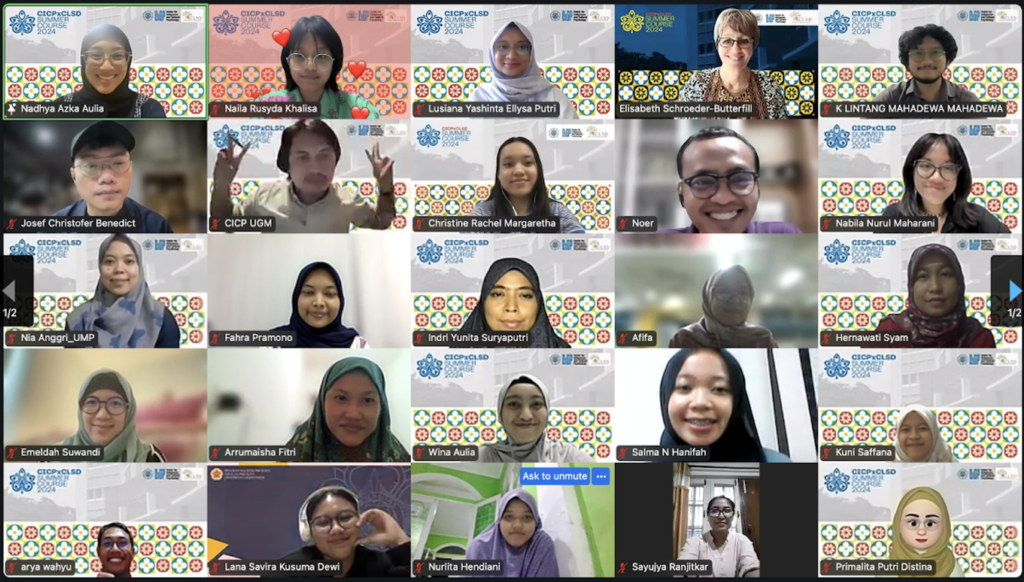
Collaborating with the Center for Indigenous and Cultural Psychology (CICP), the Center for Life-Span Development (CLSD) organized an international summer course program titled International Summer Course on Cultural Dynamics and Life-Span Development: Research Approaches and Practical Interventions. This summer course focuses on helping students gain an understanding of the role culture plays in life-span development as well as offering valuable insights into current research methodologies and approaches relevant to cultural and lifespan development. This event invites various speakers from Indonesia and all over the world with various backgrounds.

The last module, titled Thematic Explorations of Contextual Research and Intervention on Life-Span Development is unique compared to the other modules, the fact that it is divided into two sections; research, which explores the utilization of cultural and indigenous methodologies into life-span developmental research, and intervention, which talks about the significance of cultural considerations in interventions. Examples include; youth dynamics, addressing bullying, and the empowerment of older adults. The last module is constructed to fulfill Sustainable Development Goals (SDGs) such as Good Health and Well-Being (3), Quality Education (4) and Reduced Inequalities (10).

The seventh session was held on Friday, 27 September 2024, titled Social relations in the Javanese context by Prof. Faturochman, one of the lecturers in the Faculty of Psychology of Gadjah Mada University. This is also the first session of the last module. The session starts with Prof. Faturochman explains how the Javanese are divided into three classes; Santri, Abangan, and Priyayi. He then began to explain social-psychological relations, such as interpersonal, within group relations, and intergroup relations as well as explaining the aspects of relations, with emphasis on examples from Indonesia, such as Rukun (Harmony). After that, Prof. Faturochman explains a research that he did in 2018, which researches the multi-identity and relations of a local parliament member. He then continues the session by explaining the data results of his research. Just like other sessions, the session concludes with a Q & A.

Due to technical issues, the second session was postponed to a later date. The module continues with the third session, which was held on Tuesday, 1 October 2024 titled An Indonesian Indigenous perspective of life-span development by Mr. Ryan Sugiarto, one of the lecturers at Sarjanawiyata Tamansiswa University. The session begins with Mr. Sugiarto talking about Macapat, an Indonesian perspective on life-span development, specifically in Java. He also explains about the other Javanese perspectives on life-span development, with him mentioning that there are some that have three stages, some even have twelve. The session ends with a Q & A. 

The fourth session was held on Wednesday, 2 October 2024 titled Digital society and life-span development by Dr. Jessica Navarro from Elon University, the United States. The session begins with Dr. Navarro going over the basic information regarding Urie Bronfenbrenner’s theory, such as his background, why he created the theory, the development of the theory, and the criticisms of the earlier iterations of the theory. Dr. Navarro then explains one flaw in the older versions of the theory; that it didn’t include how technology can impact child and adolescent development. This is where she introduces the Neo-Ecological theory, an improved version of Bronfenbrenner’s theory, with technology and social media being considered as vital influences in each of the levels. She ends the session with explaining how artificial intelligence (AI) can be implemented into the Neo-Ecological theory. 

The fifth session was held on Thursday, 3 October 2024 titled Collaborative life-span development intervention by Dr. Sutarimah Ampuni, the head of CLSD and Dr. Yuni Hastutiningsih, a representative from The National Population and Family Planning Board (BKKBN) Yogyakarta. The session begins with Dr. Ampuni going over the basics of psychological intervention, such as the definition, stages, procedure, etc. She also explains Bronfenbrenner’s ecological theory. The session is then handed over to Dr. Hatutiningsih. She explains the general information on BKKBN, the policies, the efforts to achieve “Indonesia Emas 2045”, the programs that are available for the different life-span age groups. The session goes back to Dr. Ampuni, with her explaining the programs created with the collaboration between CLSD and BKKBN.

The sixth session was held on Monday, 7 October 2024 titled Research with children and youth in the context of migration by Dr. Roy Huijsmans, from Erasmus University Rotterdam, the Netherlands. The session starts with Dr. Huijsmans reviewing the exact meaning of child and youth. He then asks the students to take their time to answer questions regarding child and youth, specifically in relation to their age with certain behaviors. After that, he began explaining about agency in childhood and youth. Prof. Huijsmans then starts to talk about a case study he did in Laos about young people and migration. He explains that the concept of migration belongs in the youth stage of a person’s life-span. He ends the session with explaining the interventions that focus on the migrant youth of minority age. 

The seventh session was held on Tuesday, 8 October 2024 titled Empowering Older Adults by Prof. Elisabeth Schröder-Butterfill, from the University of Southampton, the UK. The session starts with Prof. Schröder-Butterfill asking the audience what ideas the students associate with older people. She then starts to explain the disengagement theory, in which withdrawal from society done by older individuals is a normal part of aging. Due to the negative connotations of the theory, Prof. Schröder-Butterfill then explains the successful aging theory. After that, Prof. Schröder-Butterfill starts to explain a program she worked on; Care Networks, which is situated in Indonesia, specifically in the regions of West Sumatra, Jakarta Yogyakarta, East Java, and the island of Alor in East Nusa Tenggara. Prof. Schröder-Butterfill concludes the session that despite the efforts of implementing elderly care in Indonesia, it’s still a major obstacle in the Indonesian healthcare system.  

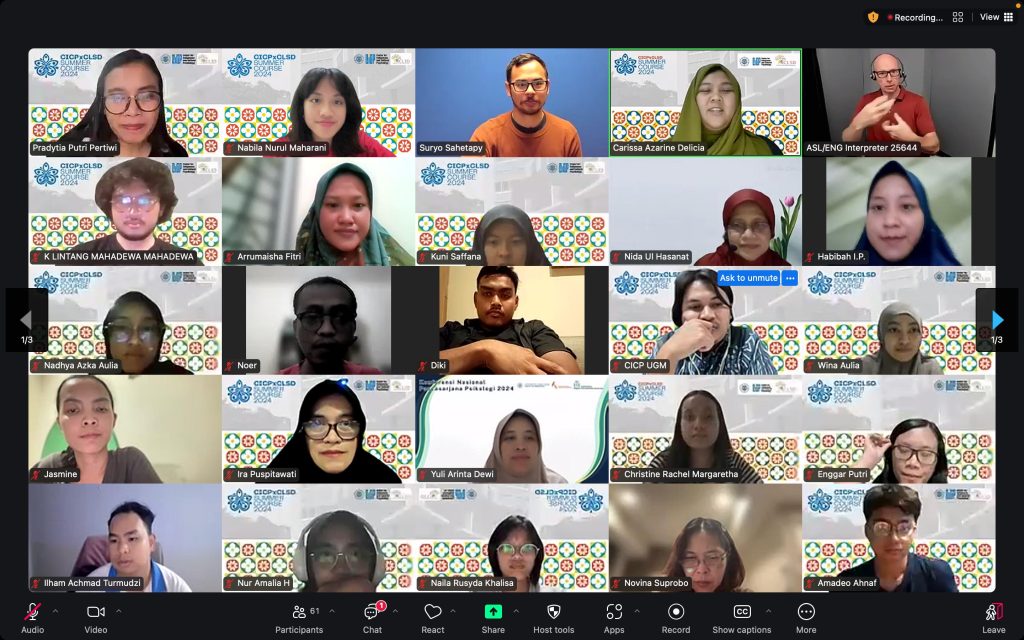
The last session of this module was the postponed second session, held on Friday, 11 October 2024 titled Risk and resilience in developmental diversity: Learning from Deaf culture by Mr. Surya Sahetapy, from the Rochester Institute of Technology, the United States. This is also the final session for the international summer course. The session begins with Mr. Sahetapy explains the historical and social contexts of deaf culture, with one of the points being how it’s easier for hearing people to communicate with deaf people by ensuring that light is present and how rounded tables give deaf people an easier way to see everybody, thus ensuring better communication. Mr. Sahetapy then explains the risks faced by the deaf individuals, such as language deprivations, educational challenges, lower median earning, Mr. Sahetapy then ends the session with explaining how hearing people can become allies for deaf people.

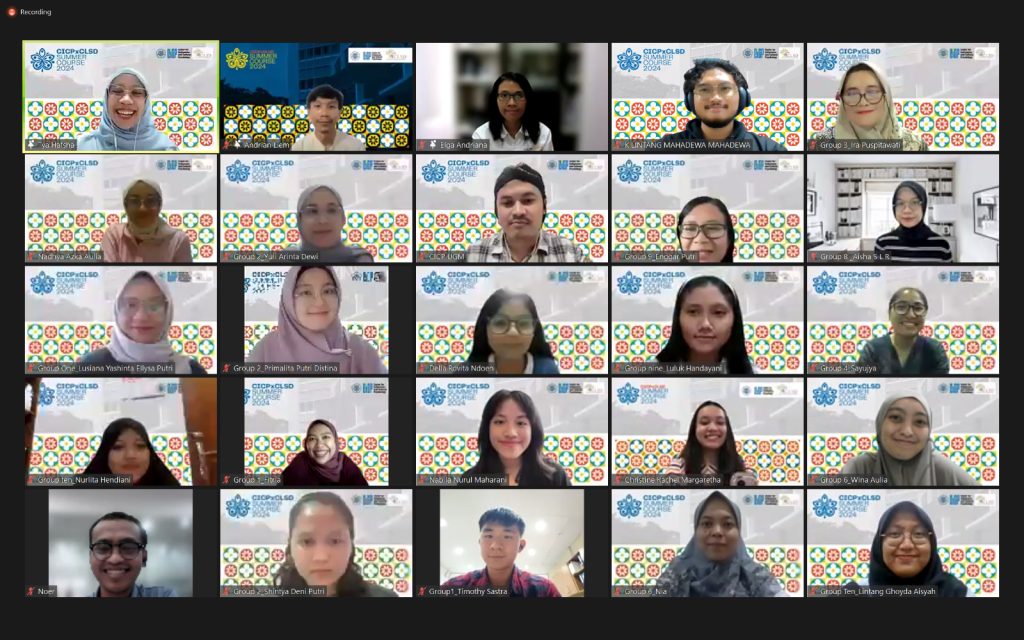
After the session with Mr. Surya Sahetapy, a student-led conference was held on Monday, 14 October 2024. This conference has the students create a research proposal based off of the materials from the lectures as the course learning outcome.  With that, the International Summer Course on Cultural Dynamics and Life-Span Development: Research Approaches and Practical Interventions has ended, which ran from 17 September to 14 October 2024, with a total of 13 sessions, 14 speakers from 9 countries, and 47 participants from 5 countries. 

We want to give a huge thank you to our speakers for sharing their insights and knowledge on cultural dynamics and lifespan development. We would also like to thank our students for their active engagement, attendance, and thoughtful contributions during the sessions. We look forward to welcoming you at our future events! [MWK]

Module 1: Understanding Culture and Life-Span Development: Concept and Current Perspectives

Artikel Liputan KegiatanBlogEventSummer Course Tuesday, 19 November 2024

For a period of two months, the Center for Life-Span Development (CLSD) collaborated with the Center for Indigenous and Cultural Psychology (CICP) to organize a summer course event titled International Summer Course on Cultural Dynamics and Life-Span Development: Research Approaches and Practical Interventions. Collaborating with a panel of experts from Indonesia and around the world, this summer course focuses on helping students gain an understanding of the role culture plays in life-span development as well as offering valuable insights into current research methodologies and approaches relevant to cultural and lifespan development. 

We invited nine international speakers and five national speakers with various backgrounds and fields of expertise from various parts of the world, such as Denmark, Italy, Australia, Malaysia, and the United States. This course is attended by 47 students, 43 from Indonesia and 4 from various countries such as Denmark, Germany, Nepal, and Australia. 

The course is divided into 3 modules. The first module, titled Understanding Culture and Life-Span Development: Concept and Current Perspectives focuses on the paradigm of culture and how its context is correlated with today’s global conditions. It also focuses on the influence of the global north-global south paradigm, digital interactions as well as the climate crises on life-span development. The first module is constructed to fulfill Sustainable Development Goals (SDGs) such as Good Health and Well-Being (3), Quality Education (4) and Reduced Inequalities (10).

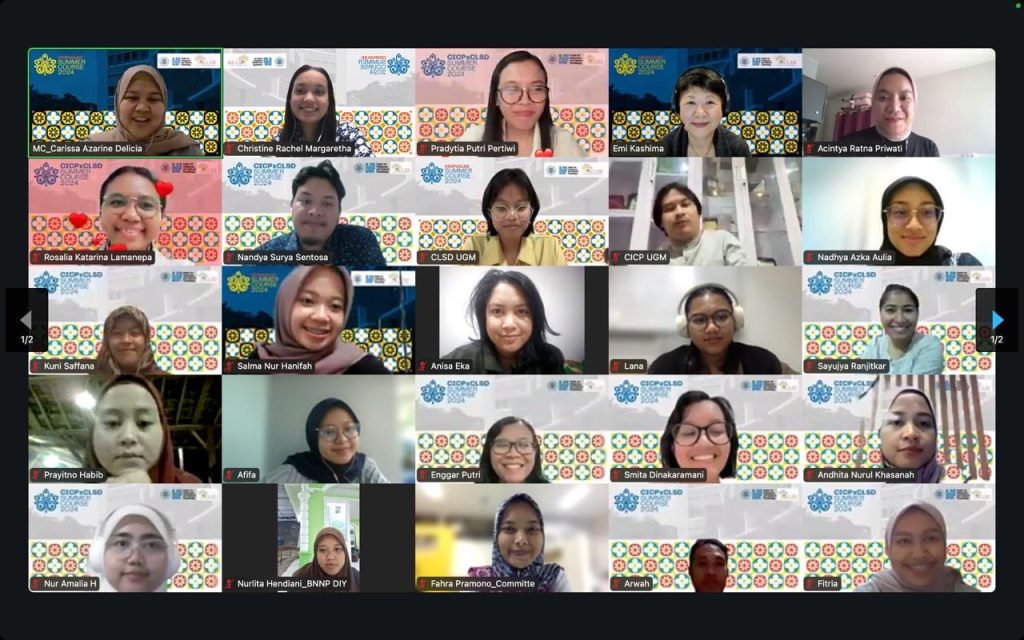
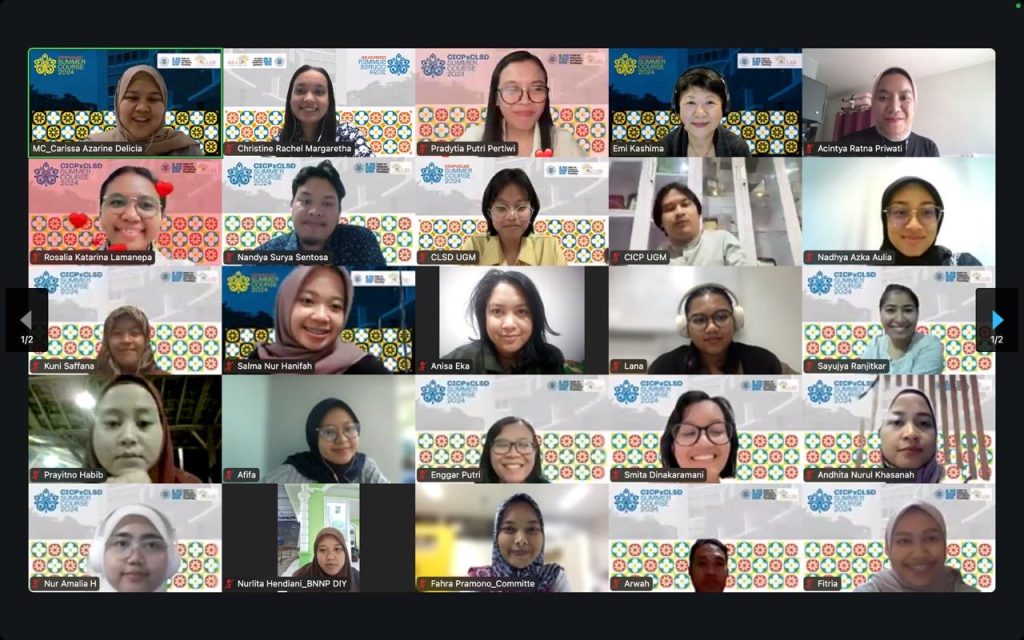
The first session of the first module was held with both an online and offline session on Tuesday, 17 September 2024. The event was carried by the Master of Ceremony of the session, Christine Rachel Margaretha and opened by Rahmat Hidayat, S.Psi., M.Sc., Ph.D., who is the dean of the Faculty of Psychology. The session begins with an introductory video on the profiles of CLSD and CICP, followed by the main event, a lecture carried out by Prof. Jaan Valsiner from Aalborg University, Denmark and Prof. Giuseppina Marsico from the University of Salerno, Italy on the topic of Redefining Culture in current context. Prof. Valsiner starts with debunking the 4 gaps of existing thinking in psychological science. After explaining the gaps, he then explains the new aspects of a “new general psychology”. He then emphasizes that researchers often use a two-dimensional method to explore the human mind, in which he uses a new method, shaped after a kleinian geometry to illustrate it. The rest of the material is then explained by Prof. Marsico, in which she explains the cultural psychology of the bordering process. The session ended with a Q & A session. 

The second session was conducted with both an online and offline session the next day, with the speakers still the same but with a different topic; (Global North–Global South) culture interactions and how it shapes life-span development. Prof. Valsiner starts this session by arguing that psychology in general needs more data. He then began explaining the important features of the methodology cycle. Examples include basic assumptions, or meta-codes, which are used to build theories, such as the assimilation theory and the proculturation theory. He also tells the students that research needs more “doubt”, which is done to reduce enforced fixed opinions. Prof. Marsico continues the lecture by explaining the Global North-Global South culture interactions and why it is important. The session ends with Prof. Valsiner & Prof. Marsico explaining their project proposal called “The Global South Network of Cultural Psychology”.

The third session was conducted on Thursday, 19 September 2024 with the topic Polyculturalism in understanding lifespan development in current society by Prof. Emiko Kashima from La Trobe University, Australia. The session started with Prof. Kashima explains Lay cultural theory and diversity ideologies, such as polyculturalism. After that, she starts to dissect the exact meaning of culture, specifically focusing on how cultural influences are “selected” through different cultural traditions. Prof. Kashima also elaborates on the topic of multiculturalism, specifically its benefits, differences, limitations, etc. The session continues with Prof. Kashima explaining cultural identity. The session ends with Prof. Kashima showing the correlation between polyculturalism and cultural identity. 

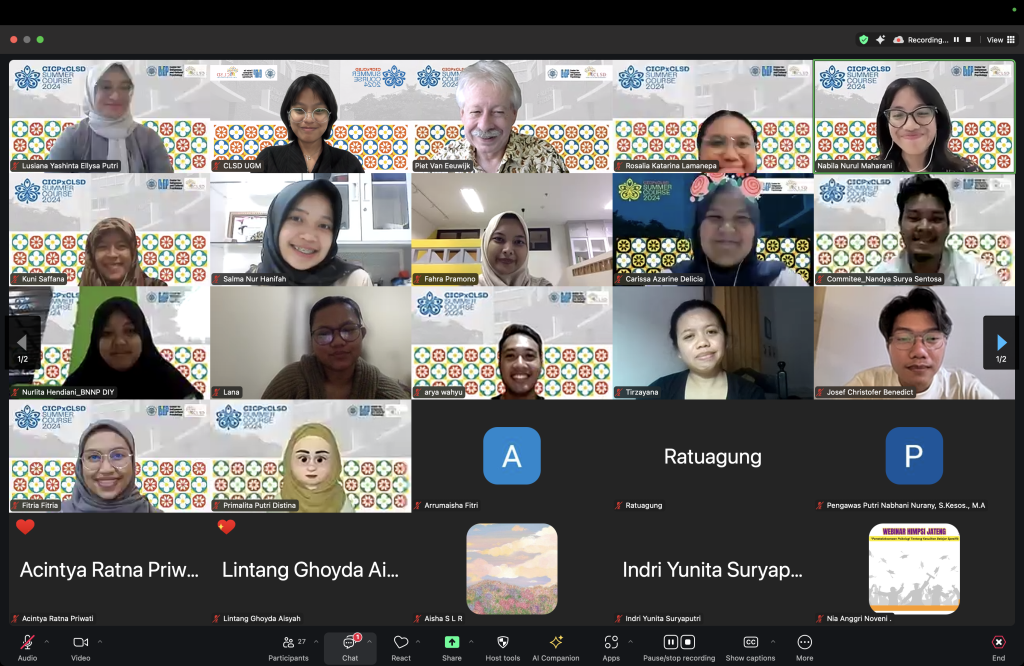
The final session of this module was held on Friday, 20 September 2024 with the topic A critique of life course intervention by Prof. Peter van Eeuwijk from the University of Basel, Switzerland. He starts the session by critiquing the definitions of lifespan and intervention. He also critiques the World Health Organization’s conventional life course model. Prof. Eeuwijk also mentions his experience using longitudinal and transversal research methodologies. During the session, Prof. Eeuwijk asks the students what is the most important factor on life quality. He ends the session by explaining about vulnerability, resiliency, and agency by using case studies. The end of Prof. Eeuwijk’s session also marks the end of the first module of the International Summer Course. [MWK]

International Summer Course on Cultural Dynamics and Life-Span Development: Research Approaches and Practical Interventions

Artikel Liputan KegiatanBlogEventSummer Course Tuesday, 19 November 2024

In 2024, the Center for Life-Span Development (CLSD) collaborated with the Center for Indigenous and Cultural Psychology (CICP) of the Faculty of Psychology, Universitas Gadjah Mada, to organize a summer course event titled “International Summer Course on Cultural Dynamics and Life-Span Development: Research Approaches and Practical Interventions”.

This marks the second time CLSD has organized a summer course, with the first being held in 2021. 

This summer course serves as a channel to discuss the contemporary issues regarding cultural dynamics and life-span development in which the students will look at the current research and interventions through panel presentations conducted by experts. This course aims to deepen students’ understanding of the role culture plays in life-span development as well as offering valuable insights into current research methodologies and approaches relevant to cultural and lifespan development, which is connected to fulfilling the Sustainable Development Goals (SDGs) such as Quality Education (4) and Reduced Inequalities (10). This course utilizes several different learning methods for the students, such as online lectures, independent study, and modular discussions. All of the courses are conducted in English and closed captioning is provided.

For this course, we invited nine international speakers and five national speakers with various backgrounds and fields of expertise from various parts of the world, such as Denmark, Italy, Australia, Malaysia, and the United States. This course is attended by 47 students, 43 from Indonesia and 4 from various countries such as Denmark, Germany, Nepal, and Australia. 

This course consisted of three different modules, each highlighting different aspects of cultural dynamics and life-span development delivered by the speakers. Module 1, titled Understanding Culture and Life-Span Development: Concept and Current Perspectives focuses on the paradigm of culture and how it is contextualized with today’s global conditions.

DateTime (GMT +7)AgendaSpeakers
Tuesday, 17 September 202416:00-18:00Redefining Culture in current contextProf. Jaan Valsiner and Prof. Giuseppina Marsico
Wednesday, 18 September 202416:00-18:00(Global North–Global South) culture interactions and how it shapes life-span developmentProf. Jaan Valsiner and Prof. Giuseppina Marsico
Thursday, 19 September 202416:00-18:00Polyculturalism in understanding lifespan development in current societyProf. Emiko Kashima
Friday, 20 September 202416:00-18:00A critique of life course interventionProf. Peter van Eeuwijk

Module 2, titled Methods for Contextual Life-Span Development: Research and Intervention dives into the methodologies for researching human development, which covers the integration of cultural diversity, optimally utilizing action research and photovoice techniques, and the ethical principles inherent in this field.

DateTime (GMT +7)AgendaSpeakers
Wednesday, 25 September 202416:00-18:00Contextual action research in developmental psychology using PhotovoiceDr. Elga Andriana
Thursday, 26 September 202416:00-18:00Ethical practice in integrating life-span development research and interventionDr. Andrian Liem

The last module, titled Thematic Explorations of Contextual Research and Intervention on Life-Span Development has two distinct sessions; research and intervention. The research session will dive into the utilization of cultural and indigenous methodologies within life-span developmental research. While the intervention session delves into the significance of cultural considerations in interventions, such as youth dynamics, addressing bullying, and the empowerment of older adults.

DateTime (GMT +7)AgendaSpeakers
Friday, 27 September 202416:00-18:00Social relations in the Javanese contextProf. Faturochman
Tuesday, 1 October 202416:00-18:00An Indonesian Indigenous perspective of life-span developmentRyan Sugiarto
Wednesday, 2 October 202419:00-21:00Digital society and life-span developmentDr. Jessica Navarro
Thursday, 3 October 202416:00-18:00Collaborative life-span development interventionDr. Sutarimah Ampuni and Dr. Yuni Hastutiningsih
Monday, 7 October 202416:00-18:00Research with children and youth in the context of migrationDr. Roy Huijsmans
Tuesday, 8 October 202416:00-18:00Empowering Older AdultsProf. Elisabeth Schröder-Butterfill
Friday, 11 October 202416:00-18:00Risk and resilience in developmental diversity: Learning from Deaf cultureSurya Sahetapy

After attending all the sessions, there is a student-led conference held on Monday, 14 October 2024. This conference has the students create a research proposal based off of the materials from the lectures as the course learning outcome. With that, the International Summer Course, which ran from 17 September to 14 October 2024, with a total of 13 sessions, 14 speakers from 9 countries, and 47 participants from 5 countries, has come to an end.

A huge thank you to our speakers for sharing their knowledge and valuable insights on cultural dynamics and lifespan development. We are also deeply grateful to all participants for their active engagement, attendance, and thoughtful contributions during the sessions. We look forward to welcoming you at our future events! [MWK]

CLSD Membangun Semangat Literasi di Kampung Suronatan melalui Pelatihan Membaca Nyaring

ArtikelArtikelArtikel Liputan Kegiatan Tuesday, 26 March 2024

Pada hari Sabtu, 2 Maret 2024 pukul 08.30-11.30 WIB, Center for Life-Span Development (CLSD) Fakultas Psikologi UGM melalui Tim The Reading Buddies mengadakan acara pelatihan read aloud atau membaca nyaring di Kampung Suronatan, Kelurahan Notoprajan, Kemantren Ngampilan, Kota Yogyakarta. Acara dihadiri oleh 19 orang, terdiri dari Kader Bina Keluarga Balita (BKB) dan orang tua yang memiliki anak usia dini. Tujuan dari acara ini adalah untuk mengenalkan dan meningkatkan kemampuan para kader BKB dan orang tua dalam praktik membaca nyaring di rumah maupun di komunitas. Kegiatan pelatihan ini merupakan kelanjutan dari aktivitas membaca nyaring oleh Tim The Reading Buddiesdua minggu sebelumnya, dengan tujuan agar masyarakat di Kampung Suronatan mampu secara mandiri melanjutkan aktivitas literasi ini.

Acara dimulai dengan sambutan dari perwakilan BKB, diikuti oleh sambutan dari moderator juga merupakan perwakilan dari CLSD, yaitu Kevin Pasquella Helian, S.Psi. Acara kemudian dilanjutkan dengan sesi pemateri oleh Navia Fathona Handayani, S.Psi., seorang pegiat literasi yang memiliki pengalaman luas dalam gerakan membaca nyaring. Materi yang disampaikan mencakup penjelasan tentang pentingnya membacakan nyaring, unsur-unsur buku yang perlu diperhatikan saat membaca nyaring, serta demonstrasi praktik membaca nyaring. Peserta menyimak dengan antusias untuk memahami berbagai aspek membaca nyaring yang diajarkan oleh pemateri.

Selanjutnya, acara melibatkan pembagian peserta pelatihan ke dalam empat kelompok kecil. Tujuan dari agenda ini adalah untuk mengaplikasikan materi yang telah diajarkan sebelumnya oleh pemateri. Dua orang fasilitator, Rahmita Laily Muhtadini, S.Psi., dan Riskhi Pratama Kusuma Arum Jati, S.Psi., bertugas memandu dinamika peserta di dalam kelompok kecil. Dalam proses ini, peserta diberi waktu untuk memilih buku dengan mempertimbangkan berbagai unsur seperti tema, alur, latar, dan tokoh cerita. Setiap peserta kemudian berlatih membaca nyaring di dalam kelompok kecil. Proses ini sangat penting untuk memastikan bahwa peserta memahami konsep membacakan nyaring tidak hanya di ranah pengetahuan, tetapi juga dalam ranah keterampilan.

Agenda berikutnya adalah sesi praktik membaca nyaring oleh perwakilan peserta dari masing-masing kelompok. Selain bertujuan untuk melihat kemampuan peserta setelah pelatihan, agenda ini juga dirancang untuk proses evaluasi bersama. Peserta memberikan apresiasi dan masukan terhadap sesama peserta selama proses membaca nyaring di depan kelas. Acara ditutup dengan pemberian sertifikat, doorprize, serta foto bersama.

Seluruh rangkaian acara dalam pelatihan membaca nyaring ini diharapkan dapat meningkatkan kepekaan dan kemampuan kader BKB serta orang tua. Acara ini juga diharapkan dapat membangun kemandirian bagi warga Kampung Suronatan dalam menyebarkan semangat literasi di rumah maupun masyarakat.

Sumber: CLSD UGM

Editor: Erna

12

Recent Posts

  • Kolaborasi UGM dengan Ghana dan Ekuador dalam Riset STRONG-YOUTH untuk Mengkaji Perlindungan Pemuda dari Risiko Eksploitasi Ekonomi Daring di Kawasan Global South
  • Dosen Fakultas Psikologi UGM Raih Prestasi Gemilang dalam Hibah EQUITY WCU 2025/2026 untuk Mengembangkan FIMF Scale
  • Tim Fakultas Psikologi UGM Raih UNICEF Grant untuk Pengembangan Perangkat Kesehatan dan Pembelajaran Inklusif
  • Webinar Temani dari Jauh, Dukung Sepenuh Hati: Sesi Berbagi
  • CLSD Onboarding in Wonderland: Memulai Perjalanan Internship dengan Semangat dan Kreativitas
Universitas Gadjah Mada

Center for Life-Span Development (CLSD)
D-602, Fakultas Psikologi, Universitas Gadjah Mada
Jalan Sosio Humaniora Bulaksumur, Yogyakarta, Indonesia 55281
clsd.psikologi@ugm.ac.id

© Universitas Gadjah Mada

KEBIJAKAN PRIVASI/PRIVACY POLICY