Universitas Gadjah Mada Universitas Gadjah Mada
Faculty of Psychology
Center for Life-Span Development (CLSD)
  • Home
  • About Us
    • Managing Team
    • Researchers
    • Interns
    • Associates
  • Articles
  • Courses
  • Activities
    • CLSD Reader’s Club
    • Summer Course
    • Photovoice
    • SAELA
    • Community Service
  • [Update 2026] Publikasi
  • Beranda
  • Summer Course
  • Summer Course
Arsip:

Summer Course

Peduli Isu Disabilitas, International Dental Summer Course 2025 Soroti Layanan Kesehatan Inklusif

ArtikelArtikelArtikel Liputan KegiatanSummer Course Monday, 23 February 2026

International Dental Summer Course (IDSC) 2025 merupakan program yang diselenggarakan oleh Fakultas Kedokteran Gigi UGM bekerja sama dengan Fakultas Teknik dan Fakultas Psikologi UGM sebagai ruang kolaborasi lintas disiplin dalam menjawab tantangan layanan kesehatan gigi masa kini. Mengusung tema besar “Transforming Oral Health Care: Implementing Digital Dentistry for Special Needs Communities”, IDSC 2025 mengangkat topik pembahasan mengenai berbagai aspek kedokteran gigi digital, khususnya penerapannya bagi individu dengan disabilitas fisik, perkembangan, dan intelektual. Program ini juga menekankan pentingnya pemahaman terhadap aspek psikologis dalam pelayanan pasien serta pemanfaatan teknologi mutakhir untuk meningkatkan kualitas dan hasil klinis.

IDSC 2025 diikuti oleh mahasiswa sarjana dan pascasarjana internasional dari Fakultas Kedokteran Gigi, Teknik, dan Psikologi di kawasan Asia, seperti Filipina, Rumania, Mesir, Pakistan, dan Qatar. Program ini berlangsung selama dua pekan, yakni pada tanggal 1-4 Juli untuk rangkaian kegiatan pre-event yang dilaksanakan secara daring dan 7-14 Juli untuk rangkaian kegiatan main-event yang dilaksanakan secara luring. Rangkaian kegiatan mencakup sesi panel akademik, kunjungan laboratorium dan fakultas, proyek praktik langsung (hands-on), pengabdian masyarakat, serta kompetisi pitching yang dirancang untuk mendorong peserta memahami peran teknologi digital, pendekatan multidisipliner, serta aspek psikososial dalam mendukung layanan kesehatan gigi yang inklusif, khususnya bagi individu dengan kebutuhan khusus.

Pada Jumat, 4 Juli 2025, Center for Life-Span Development (CLSD), Fakultas Psikologi, Universitas Gadjah Mada, turut berpartisipasi dalam rangkaian acara IDSC 2025 dengan menghadirkan Prof. David Evans dari The University of Sydney sebagai pemateri pada sesi panel akademik Lecture 9 pada pre-event daring. Dalam sesi tersebut, Prof. David Evans membawakan topik Understanding People with Disabilities and Building Respectful Relationships in Health Care. Selanjutnya, CLSD juga mengisi sesi hands-on yang dilaksanakan pada Senin, 7 Juli 2025. Sesi ini dibawakan oleh Ibu Elga Andriana, S.Psi., M.Ed., Ph.D. dari Fakultas Psikologi UGM, dengan topik Foundations and Ethical Best Practices on Engaging Individuals with Disabilities. Baik sesi Lecture 9 maupun hands-on dimoderatori oleh Wulan Nur Jatmika, S.Psi., M.Sc., dosen Fakultas Psikologi UGM.

Sesi panel akademik bersama Bapak Prof. David Evans dari University of Sydney

Pada sesi panel akademik Lecture 9, Bapak Prof. David Evans mengangkat isu bahwa hambatan yang dialami penyandang disabilitas kerap muncul bukan karena kondisi individu, melainkan akibat lingkungan dan fasilitas yang belum dirancang secara inklusif. Hal ini beliau sampaikan melalui pernyataan, “Disability is in the environment—consider how we design the environment to be barrier free and inclusive.” Dalam konteks layanan kedokteran gigi, perhatian terhadap akses fisik, pola komunikasi, serta pengalaman pasien menjadi penting agar tidak menimbulkan hambatan tambahan bagi penyandang disabilitas. Bapak David juga menyoroti digital dentistry yang berkembang untuk menggantikan metode tradisional dengan teknik yang lebih canggih dan minim tindakan invasif. Melalui pemaparan ini, peserta diajak untuk membangun relasi yang lebih setara, menghargai individu dengan disabilitas, serta memahami bahwa layanan kesehatan yang inklusif berangkat dari empati, kesadaran, dan perubahan cara pandang.

Sesi hands-on bersama Ibu Elga Andriana, S.Psi., M.Ed., Ph.D. dari Fakultas Psikologi, Universitas Gadjah Mada

Pada sesi hands-on, Ibu Elga Andriana, S.Psi., M.Ed., Ph.D. mengajak peserta memahami dasar-dasar penting dalam berinteraksi dengan individu penyandang disabilitas. Melalui pemaparannya, beliau memperkenalkan berbagai model disabilitas, termasuk Biopsychosocial Model yang memandang disabilitas sebagai hasil interaksi antara kondisi kesehatan, faktor individu, dan lingkungan, sebagaimana Ibu Elga menyampaikan bahwa “Disability is understood as the result of interactions between health conditions, individual factors, and environmental context.” Selain itu, dibahas pula Human Rights Model yang menempatkan disabilitas dalam kerangka hak asasi manusia dengan penekanan pada kesetaraan, martabat, dan partisipasi penuh dalam masyarakat, yang sejalan dengan pernyataan Ibu Elga dalam materi, yakni “Disability is a matter of equality, dignity, and full participation in society as human rights.” Pemaparan ini dilengkapi dengan penjelasan mengenai berbagai jenis disabilitas serta pentingnya menerapkan prinsip-prinsip etika, seperti autonomy, beneficence, justice, dan dignity dalam praktik profesional. 

Kemudian, materi tersebut diterapkan secara langsung melalui sesi hands-on yang terdiri dari tiga aktivitas interaktif. Aktivitas pertama, “Seeing Through Their Eyes”, menggunakan pendekatan photovoice reflection untuk mengajak peserta menganalisis foto dan narasi agar dapat memahami pengalaman hidup penyandang disabilitas, termasuk jenis disabilitas, emosi yang muncul, serta hambatan lingkungan yang sering luput disadari. Aktivitas kedua dilanjutkan dengan sesi ethical role-play “What Would You Do?” yang menghadirkan berbagai skenario nyata dalam layanan kesehatan gigi, seperti komunikasi dengan pasien non-verbal, penanganan pasien dengan autisme, persoalan persetujuan tindakan medis, dan perlindungan privasi pasien dengan disabilitas guna melatih peserta menerapkan prinsip etika dalam situasi sehari-hari. Sesi ini kemudian ditutup dengan aktivitas ketiga, “Inclusive Design Quick Challenge”, yakni peserta diberikan tantangan untuk merancang ulang bagian tertentu dari pengalaman pasien, seperti alur ruang tunggu, formulir persetujuan, atau proses pendaftaran agar lebih inklusif bagi individu, baik dengan disabilitas fisik, intelektual, maupun neurodivergen. Seluruh rangkaian aktivitas diakhiri dengan diskusi dan refleksi bersama sehingga peserta tidak hanya memahami konsep, tetapi juga mampu mengaitkannya dengan praktik nyata.

Melalui rangkaian kegiatan IDSC 2025, peserta diharapkan tidak hanya memperoleh pengetahuan dan keterampilan teknis, tetapi juga menumbuhkan kepekaan, empati, serta kesadaran akan pentingnya layanan kesehatan gigi yang inklusif bagi seluruh individu. Kolaborasi lintas disiplin antara Fakultas Kedokteran Gigi, Fakultas Psikologi, dan Fakultas Teknik UGM menjadi fondasi dalam mendorong praktik layanan kesehatan gigi yang tidak hanya ramah terhadap keberagaman, tetapi juga adaptif terhadap perkembangan teknologi. Dengan mengintegrasikan pendekatan psikologis dan pemanfaatan inovasi teknologi, IDSC 2025 diharapkan dapat berkontribusi dalam memperluas wawasan serta pengembangan layanan kesehatan gigi yang modern dan inklusif, baik di tingkat nasional maupun global.

Penulis: Hisha Latifah Daniswara
Reviewer: I Marannu Andi Khalisha, S.Psi
International Course on Public Mental Health 2025 – Bridging Generations: Thriving Youth, Supportive Families, Collaborative Schools

ArtikelArtikelArtikel Liputan Kegiatan Monday, 29 December 2025

Registration poster for the International Course on Public Mental Health 2025

In collaboration of the Center for Public Mental Health (CPMH) and the Center for Life-Span Development (CLSD) of the Faculty of Psychology, Universitas Gadjah Mada, an International Course on Public Mental Health is organised this year. This means that this is the third time CLSD has organised an international course, with the first being held in 2021. In these international courses, excellent lecturers worldwide are invited to bring a lecture, with this year inviting professionals from Universiti Malaya, UNICEF Indonesia, University of Queensland, University of Melbourne, Marmara Üniversitesi, and many more. Taking place online from Monday to Friday, October 27th–31st 2025, the International Course for Public Mental Health 2025 holds the theme, “Bridging Generations: Thriving Youth, Supportive Families, Collaborative Schools”.

This international course aims to bring together insights and strategies to empower families for them to thrive amidst these challenges, fostering resilience, balance, and stronger intergenerational connections for healthier, more supportive societies. Using existing research, evidence-based practices, and real-world practical applications, this course provides a platform for participants to explore various approaches in fostering mental health across generations and contexts, which is connected to fulfilling the Sustainable Development Goals (SDGs), such as Good Health and Wellbeing (3) and Quality Education (4). All of the courses were conducted in English and closed captioning was provided.

Day 2, brought by Tanti Kosmiyati Kostaman S. Psi, M.Sc. from UNICEF Indonesia, on Strengthening Community-Based Support Systems for Youth Mental Health

For this year’s course, we invited 6 international speakers and 6 national speakers from various backgrounds and fields of expertise from all over the world, such as Australia, Malaysia, Turkey, the United Kingdom, and the United States of America. Attended by students, researchers, educators, professionals, and parents alike from 3 different countries, this course started with an opening event brought by 2 of our speakers, Prof. Dr. Süleyman Derin and Mrs. Diana Setiyawati, MHSc., Ph.D., Psikolog on October 23rd on Living Room Talks: Diana & Derin, with the topic of “Supportive Family for Youth Mental Health Development”.

“Family is a very strategic place to produce good citizens, good characters, good workers, and good assets for society. But family also only functions well if the society or the nation also helps them too. These two things need to go hand in hand, we can’t leave families alone to carry the burden, it is our collective responsibility to make an enabler factor for the families to function well.” said Mrs. Diana Setiyawati, MHSc., Ph.D., Psikolog, the speaker at our opening event and a lecturer at the Faculty of Psychology, Universitas Gadjah Mada.

This course consisted of nine different topics, with each topic commemorating the role of parents, families, educators, communities, schools, inclusive education, advocacy, mental health, and wellbeing for all in strengthening healthier, more resilient families and thriving future generations in this changing world.

DateTime (GMT +7)AgendaSpeakers
Monday, 27 October 202513:00–14:30Parenting Adolescents in a Changing WorldProf. Dr. Fonny Dameaty Hutagalung
Tuesday, 28 October 202516:00–17:30Strengthening Community-Based Support Systems for Youth Mental HealthTanti Kosmiyati Kostaman S. Psi, M.Sc. UNICEF
Wednesday, 29 October 202513:00–14:30Designing Mental Health–Friendly School SystemsHolly Erskine
15:30–17:00Family Interventions for Mental Health PromotionProf. Dr. Ir. Euis Sunarti, M.Si
Thursday, 30 October 202512:30–14:00Digital Well-being and Family-School CollaborationTeodora Pavkovic, M.Sc., Clin.Psy.
15:30–17:00Experiences of Youth with DisabilitiesElga Andriana, S.Psi., M.Ed., Ph.D. and Christopher Florensco Raditya Setadewa
20:00–21:30Positive Discipline For EducatorsJoy Marchese
Friday, 31 October 202510:00–11:30Trauma-Informed Approaches in Schools and Families: Care, Connect, CollaborateDr. Annie Gowing
13:00–14:30Families at the Peak of Career Demands: Balancing Work and CareFuad Hamsyah, S.Psi., M.Sc., Ph.D

Day 3, Session 1, brought by Holly Erskine from The University of Queensland, Australia, on Designing Mental Health–Friendly School Systems.

With that, the International Course on Public Mental Health, held from 27–31 October 2025, with a total of 9 sessions, uniting 12 speakers from 7 countries, and 37 participants from 3 countries has come to an end. The organising committee of the International Course on Public Mental Health 2025 expresses our utmost gratitude to the speakers for sharing their valuable knowledge and insights in fostering healthier intergenerational connections among youth, families, communities, and schools. We are also extremely grateful to all participants for their active participation and contributions during this international course. We look forward to welcoming you at our upcoming events in the future!

“Let’s all be people who demystify and help build understanding,” Dr. Annie Gowing

Penulis: Naafia Halia
Reviewer: I Marannu Andi Khalisha, S.Psi

Module 3: Thematic Explorations of Contextual Research and Intervention on Life-Span Development

Artikel Liputan KegiatanBlogEventSummer Course Tuesday, 19 November 2024

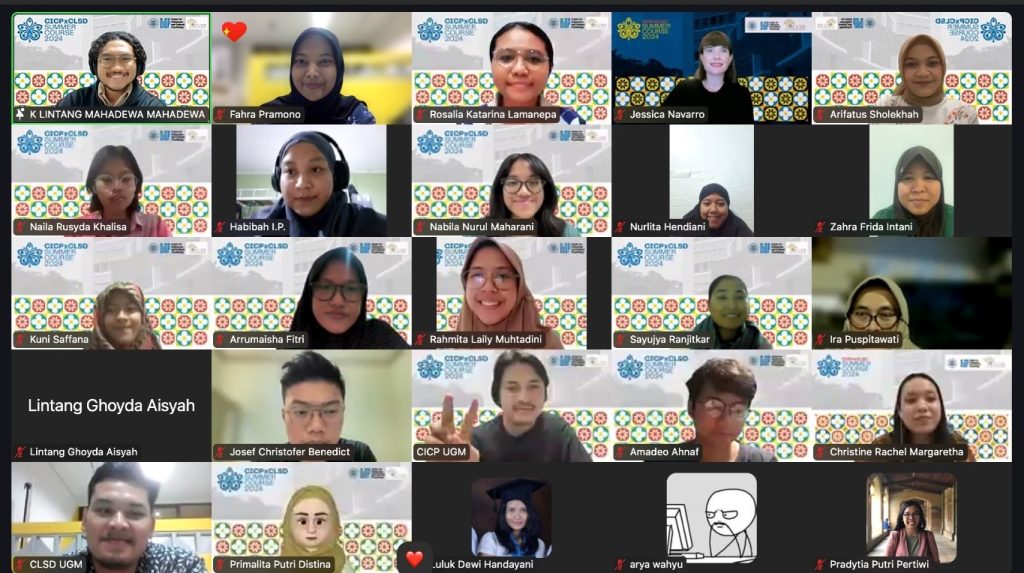
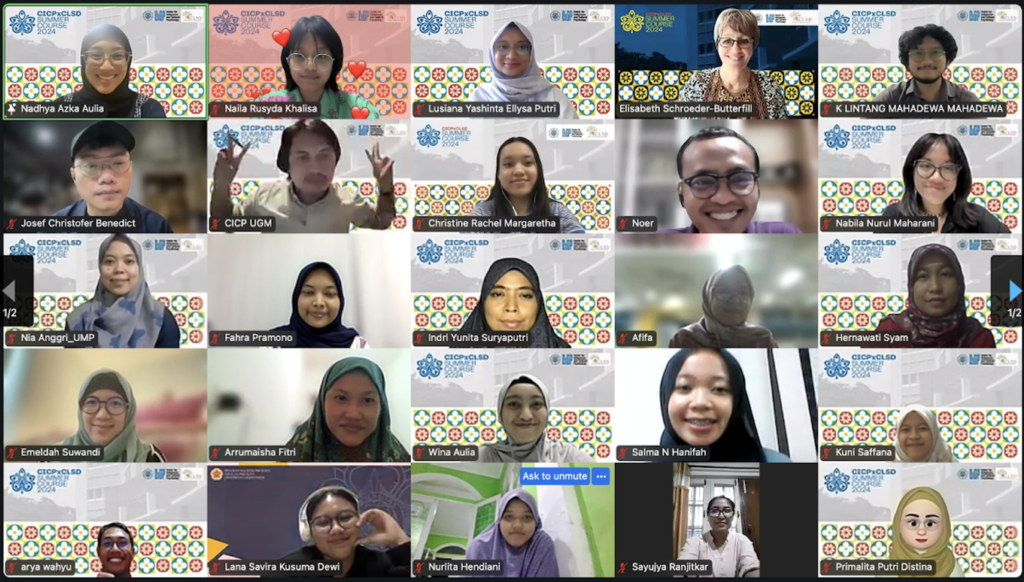
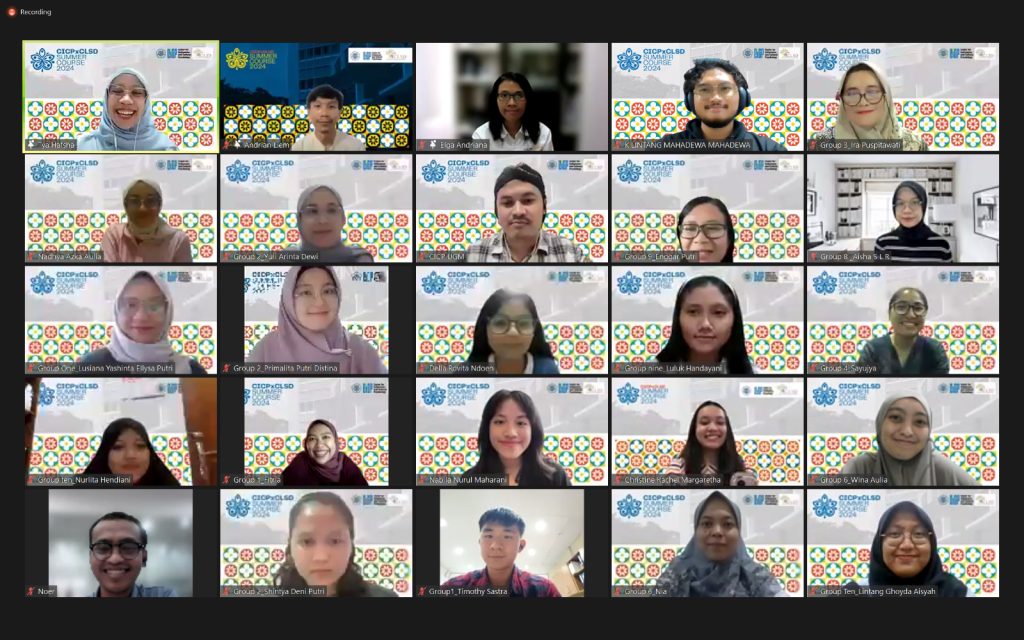
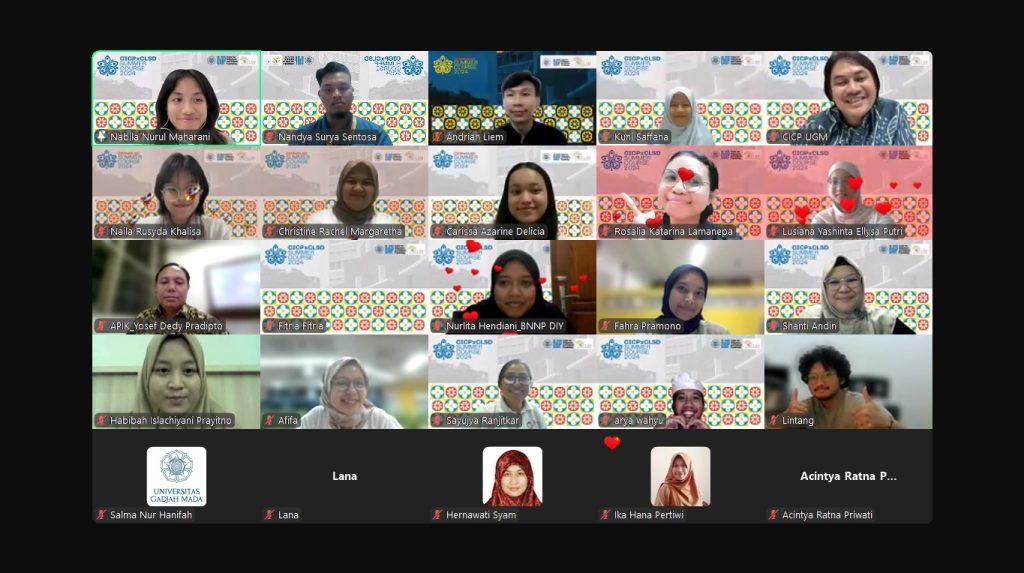
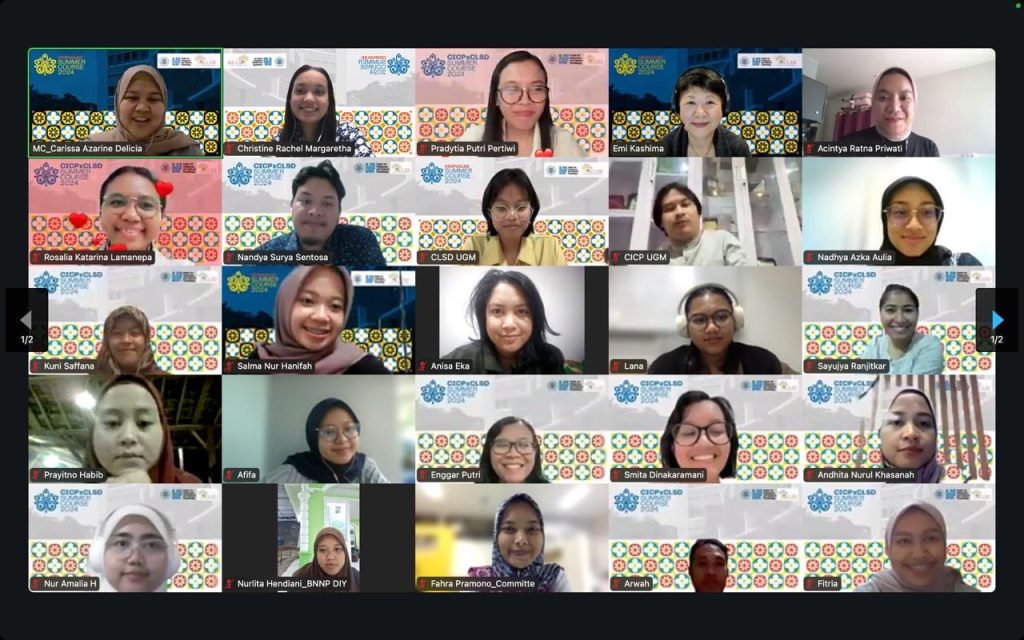
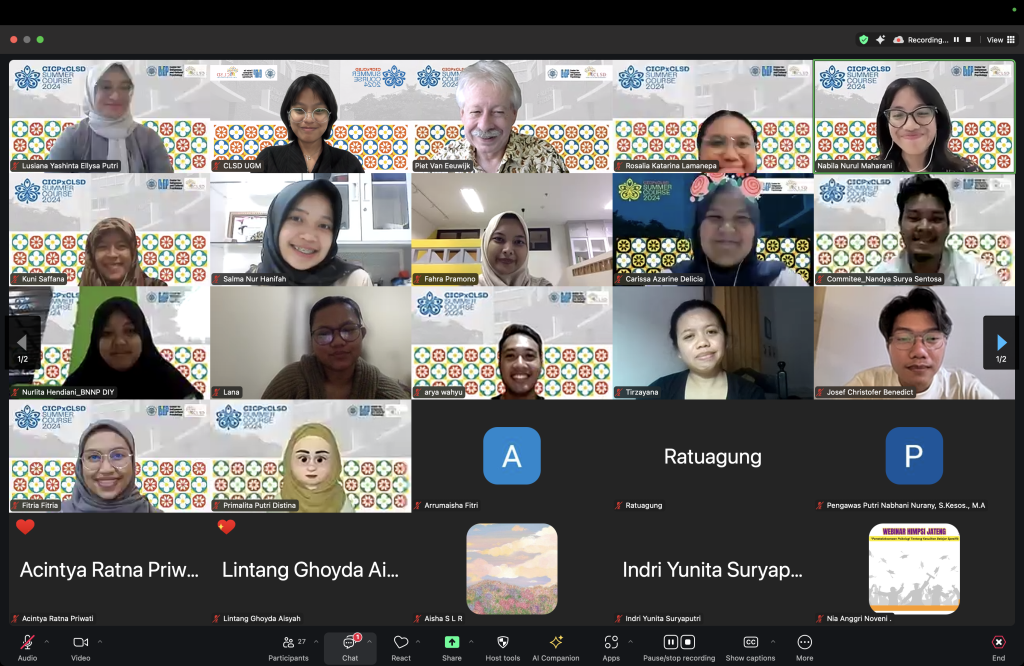
Collaborating with the Center for Indigenous and Cultural Psychology (CICP), the Center for Life-Span Development (CLSD) organized an international summer course program titled International Summer Course on Cultural Dynamics and Life-Span Development: Research Approaches and Practical Interventions. This summer course focuses on helping students gain an understanding of the role culture plays in life-span development as well as offering valuable insights into current research methodologies and approaches relevant to cultural and lifespan development. This event invites various speakers from Indonesia and all over the world with various backgrounds.

The last module, titled Thematic Explorations of Contextual Research and Intervention on Life-Span Development is unique compared to the other modules, the fact that it is divided into two sections; research, which explores the utilization of cultural and indigenous methodologies into life-span developmental research, and intervention, which talks about the significance of cultural considerations in interventions. Examples include; youth dynamics, addressing bullying, and the empowerment of older adults. The last module is constructed to fulfill Sustainable Development Goals (SDGs) such as Good Health and Well-Being (3), Quality Education (4) and Reduced Inequalities (10).

The seventh session was held on Friday, 27 September 2024, titled Social relations in the Javanese context by Prof. Faturochman, one of the lecturers in the Faculty of Psychology of Gadjah Mada University. This is also the first session of the last module. The session starts with Prof. Faturochman explains how the Javanese are divided into three classes; Santri, Abangan, and Priyayi. He then began to explain social-psychological relations, such as interpersonal, within group relations, and intergroup relations as well as explaining the aspects of relations, with emphasis on examples from Indonesia, such as Rukun (Harmony). After that, Prof. Faturochman explains a research that he did in 2018, which researches the multi-identity and relations of a local parliament member. He then continues the session by explaining the data results of his research. Just like other sessions, the session concludes with a Q & A.

Due to technical issues, the second session was postponed to a later date. The module continues with the third session, which was held on Tuesday, 1 October 2024 titled An Indonesian Indigenous perspective of life-span development by Mr. Ryan Sugiarto, one of the lecturers at Sarjanawiyata Tamansiswa University. The session begins with Mr. Sugiarto talking about Macapat, an Indonesian perspective on life-span development, specifically in Java. He also explains about the other Javanese perspectives on life-span development, with him mentioning that there are some that have three stages, some even have twelve. The session ends with a Q & A. 

The fourth session was held on Wednesday, 2 October 2024 titled Digital society and life-span development by Dr. Jessica Navarro from Elon University, the United States. The session begins with Dr. Navarro going over the basic information regarding Urie Bronfenbrenner’s theory, such as his background, why he created the theory, the development of the theory, and the criticisms of the earlier iterations of the theory. Dr. Navarro then explains one flaw in the older versions of the theory; that it didn’t include how technology can impact child and adolescent development. This is where she introduces the Neo-Ecological theory, an improved version of Bronfenbrenner’s theory, with technology and social media being considered as vital influences in each of the levels. She ends the session with explaining how artificial intelligence (AI) can be implemented into the Neo-Ecological theory. 

The fifth session was held on Thursday, 3 October 2024 titled Collaborative life-span development intervention by Dr. Sutarimah Ampuni, the head of CLSD and Dr. Yuni Hastutiningsih, a representative from The National Population and Family Planning Board (BKKBN) Yogyakarta. The session begins with Dr. Ampuni going over the basics of psychological intervention, such as the definition, stages, procedure, etc. She also explains Bronfenbrenner’s ecological theory. The session is then handed over to Dr. Hatutiningsih. She explains the general information on BKKBN, the policies, the efforts to achieve “Indonesia Emas 2045”, the programs that are available for the different life-span age groups. The session goes back to Dr. Ampuni, with her explaining the programs created with the collaboration between CLSD and BKKBN.

The sixth session was held on Monday, 7 October 2024 titled Research with children and youth in the context of migration by Dr. Roy Huijsmans, from Erasmus University Rotterdam, the Netherlands. The session starts with Dr. Huijsmans reviewing the exact meaning of child and youth. He then asks the students to take their time to answer questions regarding child and youth, specifically in relation to their age with certain behaviors. After that, he began explaining about agency in childhood and youth. Prof. Huijsmans then starts to talk about a case study he did in Laos about young people and migration. He explains that the concept of migration belongs in the youth stage of a person’s life-span. He ends the session with explaining the interventions that focus on the migrant youth of minority age. 

The seventh session was held on Tuesday, 8 October 2024 titled Empowering Older Adults by Prof. Elisabeth Schröder-Butterfill, from the University of Southampton, the UK. The session starts with Prof. Schröder-Butterfill asking the audience what ideas the students associate with older people. She then starts to explain the disengagement theory, in which withdrawal from society done by older individuals is a normal part of aging. Due to the negative connotations of the theory, Prof. Schröder-Butterfill then explains the successful aging theory. After that, Prof. Schröder-Butterfill starts to explain a program she worked on; Care Networks, which is situated in Indonesia, specifically in the regions of West Sumatra, Jakarta Yogyakarta, East Java, and the island of Alor in East Nusa Tenggara. Prof. Schröder-Butterfill concludes the session that despite the efforts of implementing elderly care in Indonesia, it’s still a major obstacle in the Indonesian healthcare system.  

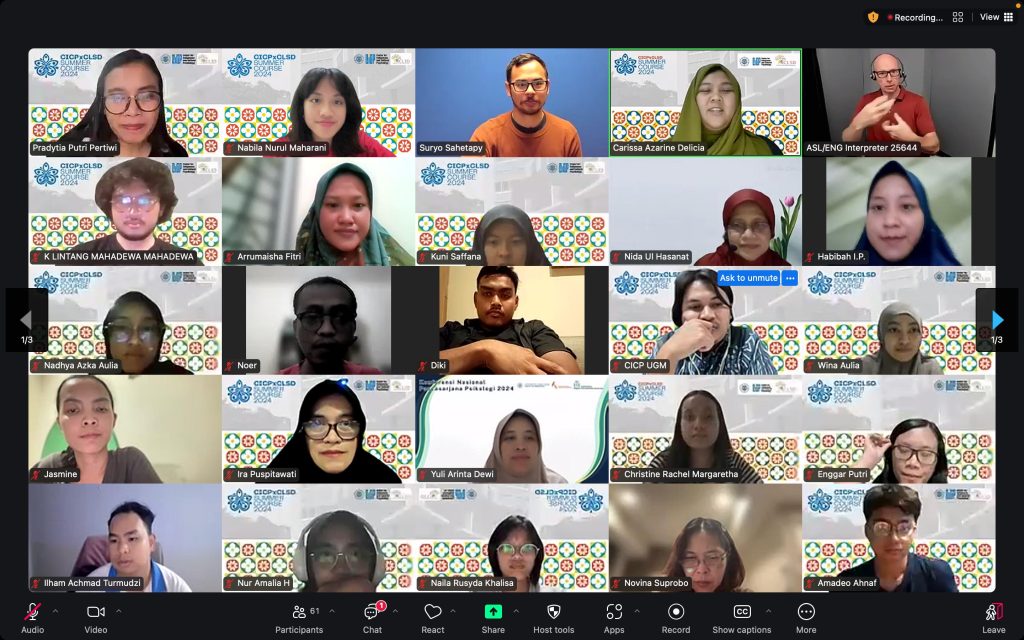
The last session of this module was the postponed second session, held on Friday, 11 October 2024 titled Risk and resilience in developmental diversity: Learning from Deaf culture by Mr. Surya Sahetapy, from the Rochester Institute of Technology, the United States. This is also the final session for the international summer course. The session begins with Mr. Sahetapy explains the historical and social contexts of deaf culture, with one of the points being how it’s easier for hearing people to communicate with deaf people by ensuring that light is present and how rounded tables give deaf people an easier way to see everybody, thus ensuring better communication. Mr. Sahetapy then explains the risks faced by the deaf individuals, such as language deprivations, educational challenges, lower median earning, Mr. Sahetapy then ends the session with explaining how hearing people can become allies for deaf people.

After the session with Mr. Surya Sahetapy, a student-led conference was held on Monday, 14 October 2024. This conference has the students create a research proposal based off of the materials from the lectures as the course learning outcome.  With that, the International Summer Course on Cultural Dynamics and Life-Span Development: Research Approaches and Practical Interventions has ended, which ran from 17 September to 14 October 2024, with a total of 13 sessions, 14 speakers from 9 countries, and 47 participants from 5 countries. 

We want to give a huge thank you to our speakers for sharing their insights and knowledge on cultural dynamics and lifespan development. We would also like to thank our students for their active engagement, attendance, and thoughtful contributions during the sessions. We look forward to welcoming you at our future events! [MWK]

Module 2: Methods for Contextual Life-Span Development: Research and Intervention

Artikel Liputan KegiatanBlogEventSummer Course Tuesday, 19 November 2024

Collaborating with the Center for Indigenous and Cultural Psychology (CICP), the Center for Life-Span Development (CLSD) organized an international summer course program titled International Summer Course on Cultural Dynamics and Life-Span Development: Research Approaches and Practical Interventions. This summer course focuses on helping students gain an understanding of the role culture plays in life-span development as well as offering valuable insights into current research methodologies and approaches relevant to cultural and lifespan development. 

For this event, nine international speakers and five national speakers with various backgrounds and fields of expertise from various parts of the world, such as Denmark, Italy, Australia, Malaysia, and the United States are invited. This course is attended by 47 students, 43 from Indonesia and 4 from various countries such as Denmark, Germany, Nepal, and Australia. 

The second module, titled Methods for Contextual Life-Span Development: Research and Intervention dives into the methodologies used to research human development. Throughout the module, the students will explore various aspects of human development research, which includes the integration of cultural diversity and the usage of photovoice techniques. The second module is constructed to fulfill Sustainable Development Goals (SDGs) such as Quality Education (4).

The fifth session was held on Wednesday, 25 September 2024, titled Contextual action research in developmental psychology using Photovoice by Dr. Elga Andriana, one of the lecturers in the Faculty of Psychology of Gadjah Mada University. This is also the first session of the second module. The session starts with Dr. Andriana sending out a link for the students to upload a picture as well as writing a short description of the picture. Dr. Andriana then began explaining photovoice in general, which include defining what it is, the procedure of doing it, as well as the methods used to discuss the photos and the analysis process. After that, Dr. Andriana invites the students to give comments on a few photovoice findings from various projects revolving around photovoice. The session ends with a reflection and a Q & A session.

The sixth session was held on Thursday, 26 September 2024, titled Ethical practice in integrating life-span development research and intervention by Dr. Andrian Liem from Monash University Malaysia. The session starts with Dr. Liem emphasizing the importance of ethics in life-span development research and intervention. He then explains the four core ethical principles in psychology, such as having dignity, justice, fidelity, and beneficence, in which he also mentions various unethical psychological experiments throughout history as examples. The session continues with Dr. Liem explains the ethical guidelines, considerations, and decision-making  to life-span development research. The session also has a Q & A session in the end. The end of Dr. Liem’s session also marks the end of the second module of the International Summer Course. [MWK]

Module 1: Understanding Culture and Life-Span Development: Concept and Current Perspectives

Artikel Liputan KegiatanBlogEventSummer Course Tuesday, 19 November 2024

For a period of two months, the Center for Life-Span Development (CLSD) collaborated with the Center for Indigenous and Cultural Psychology (CICP) to organize a summer course event titled International Summer Course on Cultural Dynamics and Life-Span Development: Research Approaches and Practical Interventions. Collaborating with a panel of experts from Indonesia and around the world, this summer course focuses on helping students gain an understanding of the role culture plays in life-span development as well as offering valuable insights into current research methodologies and approaches relevant to cultural and lifespan development. 

We invited nine international speakers and five national speakers with various backgrounds and fields of expertise from various parts of the world, such as Denmark, Italy, Australia, Malaysia, and the United States. This course is attended by 47 students, 43 from Indonesia and 4 from various countries such as Denmark, Germany, Nepal, and Australia. 

The course is divided into 3 modules. The first module, titled Understanding Culture and Life-Span Development: Concept and Current Perspectives focuses on the paradigm of culture and how its context is correlated with today’s global conditions. It also focuses on the influence of the global north-global south paradigm, digital interactions as well as the climate crises on life-span development. The first module is constructed to fulfill Sustainable Development Goals (SDGs) such as Good Health and Well-Being (3), Quality Education (4) and Reduced Inequalities (10).

The first session of the first module was held with both an online and offline session on Tuesday, 17 September 2024. The event was carried by the Master of Ceremony of the session, Christine Rachel Margaretha and opened by Rahmat Hidayat, S.Psi., M.Sc., Ph.D., who is the dean of the Faculty of Psychology. The session begins with an introductory video on the profiles of CLSD and CICP, followed by the main event, a lecture carried out by Prof. Jaan Valsiner from Aalborg University, Denmark and Prof. Giuseppina Marsico from the University of Salerno, Italy on the topic of Redefining Culture in current context. Prof. Valsiner starts with debunking the 4 gaps of existing thinking in psychological science. After explaining the gaps, he then explains the new aspects of a “new general psychology”. He then emphasizes that researchers often use a two-dimensional method to explore the human mind, in which he uses a new method, shaped after a kleinian geometry to illustrate it. The rest of the material is then explained by Prof. Marsico, in which she explains the cultural psychology of the bordering process. The session ended with a Q & A session. 

The second session was conducted with both an online and offline session the next day, with the speakers still the same but with a different topic; (Global North–Global South) culture interactions and how it shapes life-span development. Prof. Valsiner starts this session by arguing that psychology in general needs more data. He then began explaining the important features of the methodology cycle. Examples include basic assumptions, or meta-codes, which are used to build theories, such as the assimilation theory and the proculturation theory. He also tells the students that research needs more “doubt”, which is done to reduce enforced fixed opinions. Prof. Marsico continues the lecture by explaining the Global North-Global South culture interactions and why it is important. The session ends with Prof. Valsiner & Prof. Marsico explaining their project proposal called “The Global South Network of Cultural Psychology”.

The third session was conducted on Thursday, 19 September 2024 with the topic Polyculturalism in understanding lifespan development in current society by Prof. Emiko Kashima from La Trobe University, Australia. The session started with Prof. Kashima explains Lay cultural theory and diversity ideologies, such as polyculturalism. After that, she starts to dissect the exact meaning of culture, specifically focusing on how cultural influences are “selected” through different cultural traditions. Prof. Kashima also elaborates on the topic of multiculturalism, specifically its benefits, differences, limitations, etc. The session continues with Prof. Kashima explaining cultural identity. The session ends with Prof. Kashima showing the correlation between polyculturalism and cultural identity. 

The final session of this module was held on Friday, 20 September 2024 with the topic A critique of life course intervention by Prof. Peter van Eeuwijk from the University of Basel, Switzerland. He starts the session by critiquing the definitions of lifespan and intervention. He also critiques the World Health Organization’s conventional life course model. Prof. Eeuwijk also mentions his experience using longitudinal and transversal research methodologies. During the session, Prof. Eeuwijk asks the students what is the most important factor on life quality. He ends the session by explaining about vulnerability, resiliency, and agency by using case studies. The end of Prof. Eeuwijk’s session also marks the end of the first module of the International Summer Course. [MWK]

International Summer Course on Cultural Dynamics and Life-Span Development: Research Approaches and Practical Interventions

Artikel Liputan KegiatanBlogEventSummer Course Tuesday, 19 November 2024

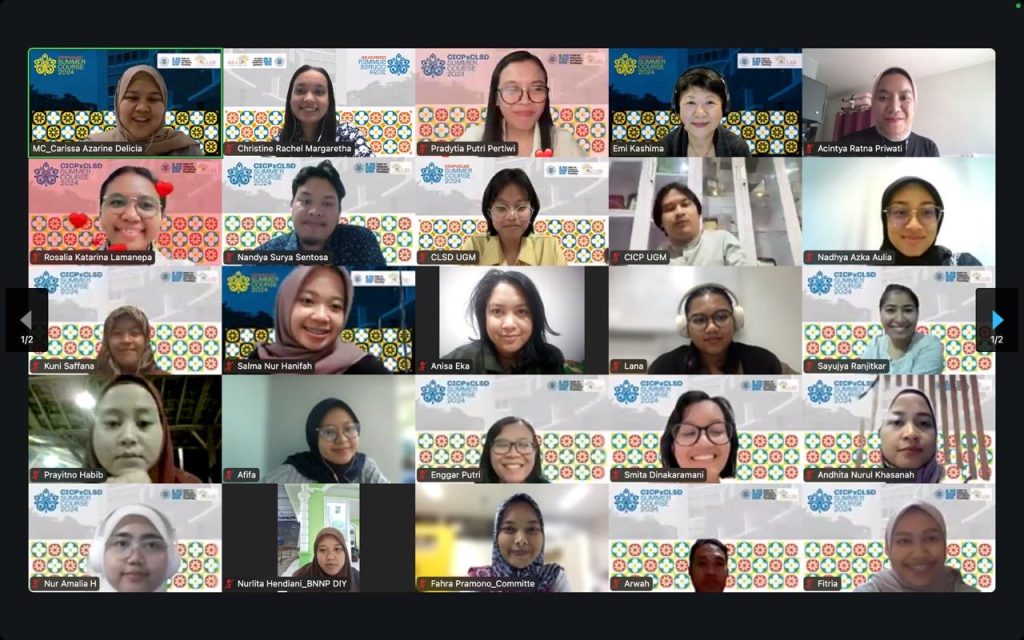
In 2024, the Center for Life-Span Development (CLSD) collaborated with the Center for Indigenous and Cultural Psychology (CICP) of the Faculty of Psychology, Universitas Gadjah Mada, to organize a summer course event titled “International Summer Course on Cultural Dynamics and Life-Span Development: Research Approaches and Practical Interventions”.

This marks the second time CLSD has organized a summer course, with the first being held in 2021. 

This summer course serves as a channel to discuss the contemporary issues regarding cultural dynamics and life-span development in which the students will look at the current research and interventions through panel presentations conducted by experts. This course aims to deepen students’ understanding of the role culture plays in life-span development as well as offering valuable insights into current research methodologies and approaches relevant to cultural and lifespan development, which is connected to fulfilling the Sustainable Development Goals (SDGs) such as Quality Education (4) and Reduced Inequalities (10). This course utilizes several different learning methods for the students, such as online lectures, independent study, and modular discussions. All of the courses are conducted in English and closed captioning is provided.

For this course, we invited nine international speakers and five national speakers with various backgrounds and fields of expertise from various parts of the world, such as Denmark, Italy, Australia, Malaysia, and the United States. This course is attended by 47 students, 43 from Indonesia and 4 from various countries such as Denmark, Germany, Nepal, and Australia. 

This course consisted of three different modules, each highlighting different aspects of cultural dynamics and life-span development delivered by the speakers. Module 1, titled Understanding Culture and Life-Span Development: Concept and Current Perspectives focuses on the paradigm of culture and how it is contextualized with today’s global conditions.

DateTime (GMT +7)AgendaSpeakers
Tuesday, 17 September 202416:00-18:00Redefining Culture in current contextProf. Jaan Valsiner and Prof. Giuseppina Marsico
Wednesday, 18 September 202416:00-18:00(Global North–Global South) culture interactions and how it shapes life-span developmentProf. Jaan Valsiner and Prof. Giuseppina Marsico
Thursday, 19 September 202416:00-18:00Polyculturalism in understanding lifespan development in current societyProf. Emiko Kashima
Friday, 20 September 202416:00-18:00A critique of life course interventionProf. Peter van Eeuwijk

Module 2, titled Methods for Contextual Life-Span Development: Research and Intervention dives into the methodologies for researching human development, which covers the integration of cultural diversity, optimally utilizing action research and photovoice techniques, and the ethical principles inherent in this field.

DateTime (GMT +7)AgendaSpeakers
Wednesday, 25 September 202416:00-18:00Contextual action research in developmental psychology using PhotovoiceDr. Elga Andriana
Thursday, 26 September 202416:00-18:00Ethical practice in integrating life-span development research and interventionDr. Andrian Liem

The last module, titled Thematic Explorations of Contextual Research and Intervention on Life-Span Development has two distinct sessions; research and intervention. The research session will dive into the utilization of cultural and indigenous methodologies within life-span developmental research. While the intervention session delves into the significance of cultural considerations in interventions, such as youth dynamics, addressing bullying, and the empowerment of older adults.

DateTime (GMT +7)AgendaSpeakers
Friday, 27 September 202416:00-18:00Social relations in the Javanese contextProf. Faturochman
Tuesday, 1 October 202416:00-18:00An Indonesian Indigenous perspective of life-span developmentRyan Sugiarto
Wednesday, 2 October 202419:00-21:00Digital society and life-span developmentDr. Jessica Navarro
Thursday, 3 October 202416:00-18:00Collaborative life-span development interventionDr. Sutarimah Ampuni and Dr. Yuni Hastutiningsih
Monday, 7 October 202416:00-18:00Research with children and youth in the context of migrationDr. Roy Huijsmans
Tuesday, 8 October 202416:00-18:00Empowering Older AdultsProf. Elisabeth Schröder-Butterfill
Friday, 11 October 202416:00-18:00Risk and resilience in developmental diversity: Learning from Deaf cultureSurya Sahetapy

After attending all the sessions, there is a student-led conference held on Monday, 14 October 2024. This conference has the students create a research proposal based off of the materials from the lectures as the course learning outcome. With that, the International Summer Course, which ran from 17 September to 14 October 2024, with a total of 13 sessions, 14 speakers from 9 countries, and 47 participants from 5 countries, has come to an end.

A huge thank you to our speakers for sharing their knowledge and valuable insights on cultural dynamics and lifespan development. We are also deeply grateful to all participants for their active engagement, attendance, and thoughtful contributions during the sessions. We look forward to welcoming you at our future events! [MWK]

Recent Posts

  • CLSD UGM Merefleksikan Prestasi Melalui CLSD End of Year Party 2025: Festival Dangdut Pantura
  • Rahasia Bahagia Lansia: Senior School Ungkap Caranya!
  • Semarak The Reading Buddies: On the Go, Tanam Minat Literasi sejak Usia Dini
  • Peduli Isu Disabilitas, International Dental Summer Course 2025 Soroti Layanan Kesehatan Inklusif
  • Festival Hari Anak 2025: Bertumbuh, Belajar, dan Sehat Mental bagi Anak di Era Digital
Universitas Gadjah Mada

Center for Life-Span Development (CLSD)
D-602, Fakultas Psikologi, Universitas Gadjah Mada
Jalan Sosio Humaniora Bulaksumur, Yogyakarta, Indonesia 55281
clsd.psikologi@ugm.ac.id

© Universitas Gadjah Mada

KEBIJAKAN PRIVASI/PRIVACY POLICY