Universitas Gadjah Mada Universitas Gadjah Mada
Faculty of Psychology
Center for Life-Span Development (CLSD)
  • Home
  • About Us
    • Managing Team
    • Researchers
    • Interns
    • Associates
  • Articles
  • Courses
  • Activities
    • CLSD Reader’s Club
    • Summer Course
    • Photovoice
    • SAELA
    • Community Service
  • [Update 2026] Publikasi
  • Beranda
  • Artikel Liputan Kegiatan
  • page. 2
Arsip:

Artikel Liputan Kegiatan

CLSD Onboarding in Wonderland: Memulai Perjalanan Internship dengan Semangat dan Kreativitas

ArtikelArtikelArtikel Liputan Kegiatan Wednesday, 31 December 2025

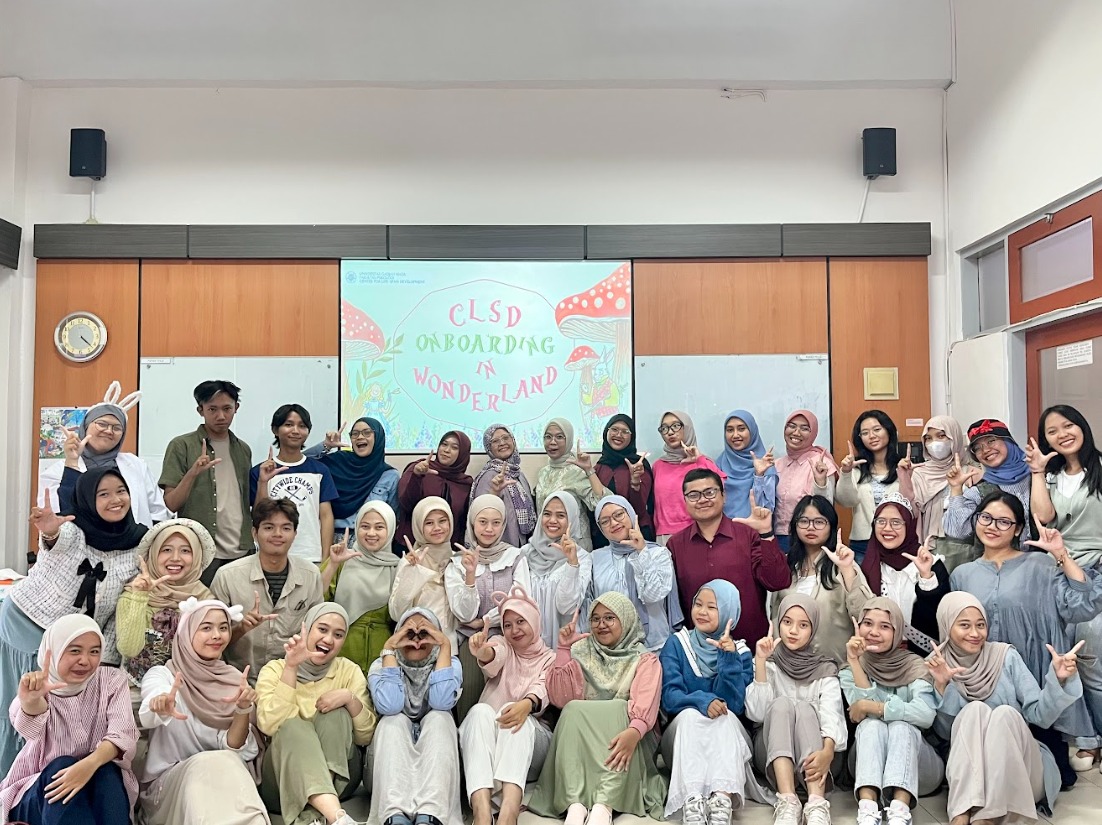
Pada Jumat, 12 September 2025, Center for Life-Span Development (CLSD) Fakultas Psikologi Universitas Gadjah Mada kembali mengadakan onboarding interns dengan tema “CLSD Onboarding in Wonderland” yang dilaksanakan di ruang K-203 Fakultas Psikologi, Universitas Gadjah Mada. Acara ini dihadiri oleh 45 peserta, terdiri dari para interns,  koordinator divisi, koordinator unit, peneliti, serta asisten CLSD. “CLSD Onboarding in Wonderland” dilaksanakan sebagai langkah awal para interns CLSD untuk mengenal lebih dalam visi, misi, serta dinamika kerja di CLSD.

Rangkaian acara dibuka oleh I Marannu Andi Khalisha, S.Psi selaku asisten CLSD sebagai master of ceremony. Selanjutnya, sesi pengenalan CLSD disampaikan oleh Ibu Aisha Sekar Lazuardini Rachmanie, S.Psi., M.Psi., Psikolog, selaku Koordinator CLSD, yang memberikan gambaran umum mengenai struktur keanggotaan, hak dan kewajiban interns, serta pelaksanaan Tridharma Perguruan Tinggi melalui program-program di CLSD. Pada sesi ini, para koordinator divisi juga memberikan penjelasan mengenai penugasan di divisi piket serta pengenalan interns yang tergabung di tiap divisi. 

Memasuki materi inti, Rahmita Laily Muhtadini, S.Psi., selaku koordinator Divisi E: Pengembangan Intern memaparkan materi “Day to Day as Intern” yang membahas aktivitas harian para interns selama terlibat di berbagai program dan aktivitas di CLSD. Pemaparan ini kemudian dilengkapi dengan pengenalan sejumlah program CLSD yang sedang berjalan, dengan tujuan memberikan gambaran kepada para intern mengenai berbagai program yang dapat mereka ikuti ke depannya. Pengenalan program disampaikan oleh Debrinna Tryanan Asmaradhani, S.Psi., M.A. serta Siti Afifa Choirunissah, S.Psi., M.Psi., Psikolog, selaku asisten CLSD. Rangkaian materi ditutup oleh Ibu Sutarimah Ampuni, S.Psi., M.Si., MPsych., Ph.D., Psikolog, selaku peneliti CLSD, yang menyampaikan materi mengenai value dan work ethics serta menekankan pentingnya menjunjung dan menerapkan CLSD values, meliputi nilai saling menghormati, profesionalisme, keadilan dan kesetaraan, kepedulian, sikap terbuka untuk berkompromi, komunikasi yang efektif, inisiatif, serta berpikir secara terbuka.

Acara ini juga menghadirkan sesi ice breaking sebagai sarana untuk mempererat kebersamaan antarpeserta. Kebersamaan tersebut juga diperkuat melalui sharing session dari masing-masing divisi untuk memberikan pemahaman lebih mendalam mengenai fungsi dan aktivitas tiap divisi di CLSD. Selanjutnya, rangkaian kegiatan dilanjutkan dengan sesi awarding Kompetisi Buku Cerita Anak CLSD 2025, yaitu ajang yang diselenggarakan oleh CLSD untuk mendorong lahirnya karya cerita anak yang kreatif, imajinatif, dan bermakna, sekaligus dapat menumbuhkan minat baca dan kecintaan terhadap literasi pada anak-anak Indonesia sejak usia dini. Dalam kompetisi ini, dipilih enam karya terbaik sebagai pemenang, yakni Debrinna Tryanan Asmaradhani, Regia Zahra Humaira, Khalishah Aulia Izzati, Rahmita Laily Muhtadini, Anindya Reva Tabina, Irrine Puspa Pertiwi. Acara ditutup dengan awarding untuk dresscode terbaik yang dikenakan peserta “CLSD Onboarding in Wonderland”.

Acara ini berjalan sukses dan meninggalkan kesan mendalam bagi seluruh peserta. Kegiatan onboarding ini diharapkan dapat menjadi bekal awal bagi para interns untuk berkontribusi secara optimal dan berproses secara profesional selama menjalani program internship di CLSD. Melalui rangkaian kegiatan yang interaktif dan inspiratif, para interns tidak hanya mendapatkan pemahaman yang lebih jelas tentang visi, misi, serta nilai-nilai CLSD, tetapi juga membangun ikatan kebersamaan yang kuat antaranggota.

Penulis: Hisha Latifah Daniswara
Reviewer: Naafia Halia & I Marannu Andi Khalisha, S.Psi
International Course on Public Mental Health 2025 – Bridging Generations: Thriving Youth, Supportive Families, Collaborative Schools

ArtikelArtikelArtikel Liputan Kegiatan Monday, 29 December 2025

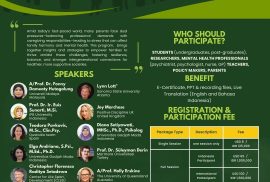
Registration poster for the International Course on Public Mental Health 2025

In collaboration of the Center for Public Mental Health (CPMH) and the Center for Life-Span Development (CLSD) of the Faculty of Psychology, Universitas Gadjah Mada, an International Course on Public Mental Health is organised this year. This means that this is the third time CLSD has organised an international course, with the first being held in 2021. In these international courses, excellent lecturers worldwide are invited to bring a lecture, with this year inviting professionals from Universiti Malaya, UNICEF Indonesia, University of Queensland, University of Melbourne, Marmara Üniversitesi, and many more. Taking place online from Monday to Friday, October 27th–31st 2025, the International Course for Public Mental Health 2025 holds the theme, “Bridging Generations: Thriving Youth, Supportive Families, Collaborative Schools”.

This international course aims to bring together insights and strategies to empower families for them to thrive amidst these challenges, fostering resilience, balance, and stronger intergenerational connections for healthier, more supportive societies. Using existing research, evidence-based practices, and real-world practical applications, this course provides a platform for participants to explore various approaches in fostering mental health across generations and contexts, which is connected to fulfilling the Sustainable Development Goals (SDGs), such as Good Health and Wellbeing (3) and Quality Education (4). All of the courses were conducted in English and closed captioning was provided.

Day 2, brought by Tanti Kosmiyati Kostaman S. Psi, M.Sc. from UNICEF Indonesia, on Strengthening Community-Based Support Systems for Youth Mental Health

For this year’s course, we invited 6 international speakers and 6 national speakers from various backgrounds and fields of expertise from all over the world, such as Australia, Malaysia, Turkey, the United Kingdom, and the United States of America. Attended by students, researchers, educators, professionals, and parents alike from 3 different countries, this course started with an opening event brought by 2 of our speakers, Prof. Dr. Süleyman Derin and Mrs. Diana Setiyawati, MHSc., Ph.D., Psikolog on October 23rd on Living Room Talks: Diana & Derin, with the topic of “Supportive Family for Youth Mental Health Development”.

“Family is a very strategic place to produce good citizens, good characters, good workers, and good assets for society. But family also only functions well if the society or the nation also helps them too. These two things need to go hand in hand, we can’t leave families alone to carry the burden, it is our collective responsibility to make an enabler factor for the families to function well.” said Mrs. Diana Setiyawati, MHSc., Ph.D., Psikolog, the speaker at our opening event and a lecturer at the Faculty of Psychology, Universitas Gadjah Mada.

This course consisted of nine different topics, with each topic commemorating the role of parents, families, educators, communities, schools, inclusive education, advocacy, mental health, and wellbeing for all in strengthening healthier, more resilient families and thriving future generations in this changing world.

DateTime (GMT +7)AgendaSpeakers
Monday, 27 October 202513:00–14:30Parenting Adolescents in a Changing WorldProf. Dr. Fonny Dameaty Hutagalung
Tuesday, 28 October 202516:00–17:30Strengthening Community-Based Support Systems for Youth Mental HealthTanti Kosmiyati Kostaman S. Psi, M.Sc. UNICEF
Wednesday, 29 October 202513:00–14:30Designing Mental Health–Friendly School SystemsHolly Erskine
15:30–17:00Family Interventions for Mental Health PromotionProf. Dr. Ir. Euis Sunarti, M.Si
Thursday, 30 October 202512:30–14:00Digital Well-being and Family-School CollaborationTeodora Pavkovic, M.Sc., Clin.Psy.
15:30–17:00Experiences of Youth with DisabilitiesElga Andriana, S.Psi., M.Ed., Ph.D. and Christopher Florensco Raditya Setadewa
20:00–21:30Positive Discipline For EducatorsJoy Marchese
Friday, 31 October 202510:00–11:30Trauma-Informed Approaches in Schools and Families: Care, Connect, CollaborateDr. Annie Gowing
13:00–14:30Families at the Peak of Career Demands: Balancing Work and CareFuad Hamsyah, S.Psi., M.Sc., Ph.D

Day 3, Session 1, brought by Holly Erskine from The University of Queensland, Australia, on Designing Mental Health–Friendly School Systems.

With that, the International Course on Public Mental Health, held from 27–31 October 2025, with a total of 9 sessions, uniting 12 speakers from 7 countries, and 37 participants from 3 countries has come to an end. The organising committee of the International Course on Public Mental Health 2025 expresses our utmost gratitude to the speakers for sharing their valuable knowledge and insights in fostering healthier intergenerational connections among youth, families, communities, and schools. We are also extremely grateful to all participants for their active participation and contributions during this international course. We look forward to welcoming you at our upcoming events in the future!

“Let’s all be people who demystify and help build understanding,” Dr. Annie Gowing

Penulis: Naafia Halia
Reviewer: I Marannu Andi Khalisha, S.Psi
Inklusivitas CLSD: Kisah Seto, Intern Disabilitas Intelektual yang Menginspirasi

ArtikelArtikelArtikel Liputan Kegiatan Thursday, 18 September 2025

Center for Life-Span Development (CLSD) UGM merupakan wadah bagi interns yang memiliki potensi luar biasa dan inspiratif. Salah satunya adalah Christopher Florensco Raditya Setadewa atau lebih akrab disapa Seto. Di tahun 2025 ini, Seto yang merupakan individu disabilitas intelektual, telah berkesempatan menjadi intern di CLSD UGM. Hadirnya Seto sebagai bagian dari CLSD UGM merupakan bukti keterbukaan dan wujud komitmen CLSD UGM terhadap inklusivitas untuk penyandang disabilitas di lingkungan kerja.

Tidak hanya itu, CLSD UGM juga memberikan energi baru yang menyegarkan bagi Seto sendiri. “Menyenangkan, apa yang mau disampaikan enjoy aja. Seneng juga dapet temen-temen baru, orangnya asik-asik,” ungkap Seto, menggambarkan suasana CLSD UGM yang ramah dan suportif.

Kondisi yang dialami Seto tidak menghalanginya untuk tetap aktif dalam berbagai kegiatan di CLSD UGM. Beberapa waktu terakhir, lulusan diploma perhotelan dari Sekolah Tumbuh ini aktif di salah satu program yang diselenggarakan oleh CLSD UGM, yaitu Kelas Psikologi Senior School. Senior School merupakan sebuah program sekolah lansia yang diselenggarakan oleh CLSD UGM  bekerja sama dengan BIAS School, di mana para peserta akan menerima berbagai materi mengenai psikologi dari dosen Fakultas Psikologi UGM.

Pada program tersebut, Seto terlibat dalam dua pertemuan terakhir yang diadakan pada tanggal 29 dan 30 Juli 2025. Sebagai fasilitator,  ia bertugas untuk mendokumentasikan kegiatan dan memberikan mikrofon kepada peserta yang ingin bertanya. Meskipun awalnya merasa canggung karena ini merupakan hal yang tidak biasa, tetapi Seto tidak butuh waktu lama untuk dapat beradaptasi. “Mereka lebih semangat. Meskipun baru pertama kali ketemu jadi canggung, tapi semangat mereka menular,” ujar Seto penuh semangat. Bahkan di pertemuan kedua, Seto berinisiatif untuk membuat video dokumentasi dengan lebih menarik layaknya ‘content creator’.

Seto diperkenalkan kepada CLSD oleh Ibu Elga Andriana, S.Psi., M.Ed., Ph.D., Dosen Fakultas Psikologi UGM sekaligus salah satu tim peneliti di CLSD. Bu Elga yang telah mengenal Seto sejak kelas 1 Sekolah Dasar, menganggap Seto sebagai individu yang memiliki kemampuan yang sangat baik dan adaptif. 

Di luar kegiatannya bersama CLSD UGM, Seto juga aktif terlibat dalam berbagai kegiatan lainnya. Misalnya, ia sempat mengikuti beberapa mata kuliah di Fakultas Psikologi UGM. Meskipun terkadang ia merasa materi yang diberikan tidak sepenuhnya terjangkau, respon dari mahasiswa lain membuat proses belajar menjadi lebih mudah. “Tanggapan mahasiswa lain juga sangat welcome, nice,” ujar Bu Elga. Hal ini membuktikan bahwa lingkungan yang suportif adalah kunci utama untuk menciptakan ruang belajar yang inklusif bagi siapa pun.

Selain itu, Bu Elga juga menceritakan keterlibatan Seto dalam proyek photovoice terkait inklusivitas. Dalam proyek tersebut, Seto diminta untuk memotret kerumunan orang yang ada di jalanan Malioboro, kemudian menceritakannya. Menariknya, Seto melakukan hal tersebut secara antusias dan mandiri tanpa bantuan orang tua. Hal ini tentu menunjukkan kemandirian dan keinginan belajar yang tinggi dari Seto, yang tentunya tidak terlepas dari dukungan yang diberikan orang tua untuk mendukung perkembangannya.

Kisah Seto di CLSD bukan hanya sekadar cerita tentang seorang intern biasa. Seto adalah representasi dari semangat dan keinginan belajar yang tak pernah pudar. Dengan kemampuan sosial dan kemandirian yang luar biasa, pengalamannya memberikan pemahaman bahwa inklusivitas adalah tindakan nyata yang bisa dilakukan untuk menciptakan ruang aman dan ramah bagi semua orang.

#AustraliaAwardslndonesia #AAG #OzAlum

Penulis: Retni Retnasari, S.Psi., M.A
Reviewer: Bhekti Lukita Nurcaesya

Kader Hebat, Anak Bahagia: Pelatihan Stimulasi Sosioemosional pada Anak Usia Dini untuk Kader Bina Keluarga Balita di Gunungkidul

Artikel Liputan KegiatanEvent Friday, 3 January 2025

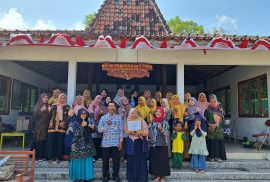
Pada Selasa, 23 Juli 2024, Center for Life-Span Development (CLSD) Fakultas Psikologi UGM mengadakan pelatihan “Stimulasi Sosioemosional pada Anak Usia Dini” di Padukuhan Jambu, Giricahyo, Purwosari, Gunungkidul. Acara ini merupakan kolaborasi antara CLSD dengan perwakilan Badan Koordinasi Keluarga Berencana Nasional (BKKBN) DIY dan dihadiri oleh 25 peserta, termasuk Kader Bina Keluarga Balita (BKB) PUSPAMEKAR dan beberapa orang tua setempat. Dian Mufitasari, S.Psi., M.Psi., Psikolog, dosen Fakultas Psikologi UGM menjadi narasumber utama pada acara pelatihan ini.

Pelatihan ini bertujuan untuk meningkatkan pemahaman dan keterampilan para kader Bina Keluarga Balita Holistik Integratif (BKB HI) dalam menstimulasi perkembangan sosioemosional anak usia dini. Harapannya, kader dapat mengaplikasikan ilmu yang didapatkan ke lingkungan sekitar mereka.

 “Kami ingin kader memiliki pemahaman yang mendalam tentang pentingnya stimulasi sosioemosional pada anak usia dini agar mampu memberikan dampak positif pada perkembangan anak,” ujar Dian Mufitasari, selaku narasumber utama dalam pelatihan ini.

Pelatihan dibuka dengan sosialisasi pengisian Kartu Kembang Anak (KKA) yang dipandu oleh perwakilan BKKBN DIY. Dalam sesi ini, para peserta diajak untuk mempelajari cara mengisi KKA sebagai instrumen untuk memonitor perkembangan anak. Selanjutnya, narasumber memberikan pemaparan materi mengenai pentingnya stimulasi sosioemosional serta metode-metode yang dapat diterapkan oleh para kader dan orang tua dalam mengembangkan kemampuan sosioemosional anak.

Setelah pemaparan materi, para peserta berkesempatan mempraktikkan secara langsung beberapa teknik stimulasi sosioemosional melalui suatu kegiatan membaca cerita bertajuk “Gajah yang Baik Hati”. Dalam sesi praktik ini, peserta belajar mengenali dan memberi nama emosi yang dirasakan orang lain serta mengekspresikan kepedulian terhadap sesama dengan menggunakan kartu bergambar emosi. Tidak hanya teori dan praktik, pelatihan ini juga dilengkapi dengan sesi sosialisasi mengenai metode monitoring keberhasilan pelatihan. Para peserta diminta untuk menerapkan materi yang telah dipelajari kepada komunitas masing-masing. Proses ini akan dimonitor oleh tim CLSD melalui grup WhatsApp dan peserta yang berhasil mengaplikasikan metode dengan baik akan mendapatkan penghargaan dalam bentuk kompetisi.

Sebagai penutup, peserta diminta mengisi refleksi tentang pelatihan yang telah dijalani. “Melalui refleksi ini, kami berharap peserta dapat menganalisis pengalaman mereka dan memahami sejauh mana pelatihan ini bermanfaat bagi mereka,” jelas Salsabila Salwa, co-trainer dalam pelatihan ini. Refleksi ini juga akan digunakan sebagai bahan evaluasi untuk meningkatkan kualitas pelatihan di masa mendatang.

Pelatihan stimulasi sosioemosional ini merupakan langkah nyata untuk memperkuat kapasitas kader dalam mengoptimalkan perkembangan anak usia dini. Dengan adanya kolaborasi antara CLSD Fakultas Psikologi UGM dan BKKBN DIY, diharapkan semakin banyak kader yang mampu menjadi agen perubahan di lingkungan mereka. Pelatihan ini juga menekankan pentingnya kolaborasi antara masyarakat, lembaga pendidikan, dan pemerintah dalam mewujudkan lingkungan yang mendukung tumbuh kembang anak secara optimal.

Kader Hebat, Anak Bahagia: Pelatihan Stimulasi Sosioemosional pada Anak Usia Dini untuk Kader Bina Keluarga Balita di Sleman

Artikel Liputan KegiatanEvent Friday, 3 January 2025

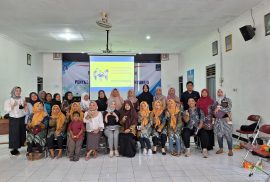
Pada hari Senin, 22 Juli 2024, CLSD melaksanakan kegiatan Pelatihan Stimulasi Sosioemosional pada Anak Usia Dini untuk Kader Bina Keluarga Balita di Kabupaten Sleman. Pelatihan tersebut difasilitasi oleh dosen Fakultas Psikologi Universitas Gadjah Mada, Ibu Theresia Novi Poespita Candra, S.Psi., M.Si., Ph.D., Psikolog. Kegiatan ini diikuti oleh 24 orang peserta yang meliputi Kader Bina Keluarga Balita (BKB) Dahlia, PKB Kecamatan Tempel, serta orang tua setempat yang memiliki anak usia dini.

Pelatihan ini bertujuan untuk meningkatkan kesadaran, pemahaman, dan keterampilan Kader Bina Keluarga Balita Holistik Integratif (BKB HI) dalam menstimulasi perkembangan sosioemosional anak usia dini. Setelah diberikan pelatihan, para kader diharapkan dapat menyebarluaskan ilmu yang telah diperoleh ke masyarakat di lingkungannya. Selain itu, kegiatan ini diharapkan dapat memenuhi beberapa Sustainable Development Goals (SDGs), seperti Kehidupan Sehat dan Sejahtera, Pendidikan Berkualitas, serta Kemitraan untuk Mencapai Tujuan. 

Rangkaian kegiatan pelatihan diawali dengan sosialisasi pengisian Kartu Kembang Anak (KKA) oleh Badan Kependudukan dan Keluarga Berencana Nasional (BKKBN). Selanjutnya, Trainer memberikan materi mengenai tujuan dan cara mengembangkan kemampuan sosioemosional pada anak usia dini. Beberapa media digunakan sebagai metode pengajaran, seperti ceramah, diskusi, video, dan handout. Setelah itu, Co-Trainer memandu para peserta dalam melakukan praktik untuk satu bagian materi yang telah disampaikan, yaitu mengenai Kontrol Diri. Praktik diawali oleh pelatihan olah nafas dan dilanjutkan dengan pemberian stimulasi melalui dongeng “Zebra yang Pemarah”. 

Kegiatan dilanjutkan dengan pelaksanaan sosialisasi monitoring yang diberikan oleh Co-Trainer. Setiap peserta diminta mempraktikkan materi sosialisasi kepada komunitas serta menyusun dokumentasi kegiatan. Hasil kegiatan yang dibuktikan dengan dokumentasi dari setiap kabupaten akan dikompetisikan. Terakhir, acara ditutup dengan pelaksanaan refleksi materi yang dipandu oleh Trainer. 

Kegiatan ini memberikan gambaran mengenai pengetahuan orang tua zaman sekarang tentang perkembangan sosioemosional anak-anaknya sendiri. Di awal sesi, para peserta tampak belum mengetahui mengapa pengetahuan tersebut penting untuk dimiliki dan seberapa jauh kemampuan sosioemosional dapat berdampak pada kehidupan anak-anak mereka. Namun, seiring berjalannya sesi, para peserta tampak antusias untuk menerima materi. Mereka mampu memantik diskusi dengan berbagai pertanyaan yang menarik dan tampak bersemangat dalam mengikuti kegiatan praktik.

Refleksi yang diberikan peserta turut menunjukkan bahwa mereka menganggap materi yang diberikan bermanfaat dan bermakna untuk mereka. “Terima kasih untuk Ibu (Novi), kami tambah ilmunya untuk bisa mengendalikan emosi ke anak-anak, suami, dan lingkungan sekitar,” ujar salah satu peserta dari BKB Dahlia.

CLSD UGM Rayakan Pencapaian Tahunan Melalui CLSD End of Year Party 2024: Glamorizing the Past, Sparking the Future

Artikel Liputan KegiatanEvent Friday, 3 January 2025

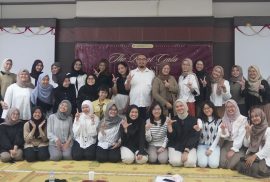
Center for Life-Span Development (CLSD) UGM kembali menyelenggarakan kegiatan CLSD End of Year Party, sebuah agenda tahunan untuk merayakan berbagai pencapaian dan karya CLSD yang telah dihasilkan dalam satu tahun terakhir. Pada tahun ini, kegiatan dilaksanakan pada tanggal 13 Desember 2024 dengan mengusung tema “Glamorizing the Past, Sparking the Future”. Acara yang penuh dengan semangat dan kehangatan ini terlaksana secara sukses dengan dihadiri oleh 50 peserta yang terdiri dari interns, senior interns, office manager, hingga dosen.

Kegiatan dibuka dengan sambutan dari kepala CLSD, Sutarimah Ampuni, M.Si., MPsych., Ph.D., Psikolog. Dalam sambutan tersebut, Ibu Ampuni berpesan untuk tetap menjaga semangat dan inisiatif para interns dalam mengikuti project-project di CLSD. Selain itu, Wakil Dekan Bidang Penelitian, Pengabdian kepada Masyarakat, dan Kerja Sama, yaitu Ibu Pradytia Putri Pertiwi, S.Psi, Ph.D. yang juga hadir pada kegiatan tersebut turut memberikan sambutan. Beliau menyampaikan apresiasinya bahwa CLSD merupakan salah satu unit yang memiliki penelitian dan pengabdian masyarakat terbanyak di Fakultas Psikologi UGM.

Kegiatan End of Year Party ini terbagi menjadi beberapa sesi kegiatan, mulai dari bermain games bersama hingga menonton video kaleidoskop CLSD 2024 sebagai bentuk apresiasi dan nostalgia project-project dan karya yang telah tercapai sepanjang tahun 2024. Sepanjang 2024, tercatat beberapa hasil karya CLSD antara lain, yakni 10 hak kekayaan intelektual (HKI), 6 penelitian, 3 video, dan 2 materi ajar.

Selain pemutaran video, terdapat sesi kegiatan yang tidak kalah spesialnya yaitu penyerahan sertifikat apresiasi dan surat keterangan magang kepada para interns yang telah menyelesaikan periode magangnya, sebagai bukti resmi magang, apresiasi, dan tanda terima kasih CLSD kepada para interns atas kontribusi dan dedikasinya selama menjadi interns di CLSD.

Melalui End of Year Party 2024, para interns dan dosen dapat melihat dan mengingat kembali perjalanan di masa lalu yang telah dilalui dengan penuh perjuangan yang patut dibanggakan. Hal ini sekaligus memacu dan mempersiapkan diri untuk melanjutkan perjuangan tersebut di masa depan. CLSD End of Year Party 2024 merupakan bukti bahwa CLSD menghargai setiap pencapaian dan kontribusi sekecil apapun dari seluruh elemen yang terlibat dalam membuat CLSD semakin maju. Dengan semangat yang terus membara, CLSD UGM siap menghasilkan karya dan pencapaian-pencapaian terbaik lainnya di 2025 dan mengucapkan terima kasih atas segala suka cita di 2024.

Penulis: Bhekti Lukita Nurcaesya
Reviewer: Anggia Atin Aprila, S.Psi

Memperingati Hari Anak Sedunia, CLSD UGM X IPPI DIY Adakan Webinar Mencegah, Mengenali, dan Merespon Kekerasan Seksual pada Anak

ArtikelArtikelArtikel Liputan KegiatanEvent Monday, 23 December 2024

Center for Life-Span Development (CLSD) UGM berkolaborasi dengan Ikatan Psikologi Perkembangan Indonesia (IPPI) Wilayah DIY mengadakan webinar bertajuk “Mencegah, Mengenali, dan Merespons Kekerasan Seksual pada Anak” pada 23 dan 30 November 2024. Webinar ini dilaksanakan dalam rangka memperingati Hari Anak Sedunia yang jatuh pada tanggal 20 November 2024 sekaligus sebagai respons atas semakin meningkatnya kekerasan seksual yang terjadi pada anak di Indonesia.

Acara dibuka oleh sambutan dari kepala CLSD, Sutarimah Ampuni, M.Si., MPsych., Ph.D., Psikolog dan Ketua IPPI Wilayah DIY, Dr. Rita Eka Izzaty, S.Psi., M.Si, Psikolog. Dalam sambutan tersebut, disampaikan bahwa kekerasan pada anak (KSA) merupakan permasalahan serius yang dapat memberikan dampak negatif jangka panjang pada anak sehingga perlu menjadi perhatian dari seluruh lapisan masyarakat. 

“Mengingat seriusnya dampak kekerasan seksual pada anak, diperlukan langkah-langkah pencegahan dan penanganan yang komprehensif yang melibatkan seluruh lapisan masyarakat. Kesadaran (awareness) mengenai kekerasan seksual pada anak termasuk pencegahannya perlu disebarluaskan ke masyarakat, terutama yang berhubungan dekat dengan anak-anak,” ungkap Sutarimah Ampuni.

Webinar ini melibatkan para ahli di bidang penanganan kekerasan seksual pada anak sebagai narasumber-narasumbernya, yakni Ir. Emmy Lucy Smith, M. Krim (Pendiri Yayasan Kakak di Surakarta), Vitria Lazzarini, M.Psi, Psikolog (Psikolog dan Praktisi Pendamping Kekerasan Seksual Anak), Dr. Maria Goretti Adiyanti, M.S., (Dosen dan Peneliti di Fakultas Psikologi Universitas Gadjah Mada), dan Lucia Peppy Novianti, M.Psi, Psikolog (Founder dan CEO Wiloka Workshop). 

Di pertemuan pertama (23/11), materi yang disampaikan terdiri dari  konsep kekerasan seksual dan contoh kasus-kasus nyata di lapangan serta cara membangun kesadaran tentang KSA di keluarga dan sekolah. Sementara pada pertemuan kedua (30/11), materi yang disampaikan membahas tentang karakteristik perkembangan anak untuk pencegahan dan penanganan kekerasan seksual pada anak dan pendampingan awal untuk anak yang mengalami atau terindikasi mengalami KSA.

Melalui webinar ini, CLSD UGM dan IPPI DIY berharap dapat memberikan kontribusi nyata ke masyarakat dalam upaya mengedukasi peserta mengenai bagaimana langkah pencegahan kekerasan seksual pada anak dimulai dari lingkungan terdekat mereka. 

Module 3: Thematic Explorations of Contextual Research and Intervention on Life-Span Development

Artikel Liputan KegiatanBlogEventSummer Course Tuesday, 19 November 2024

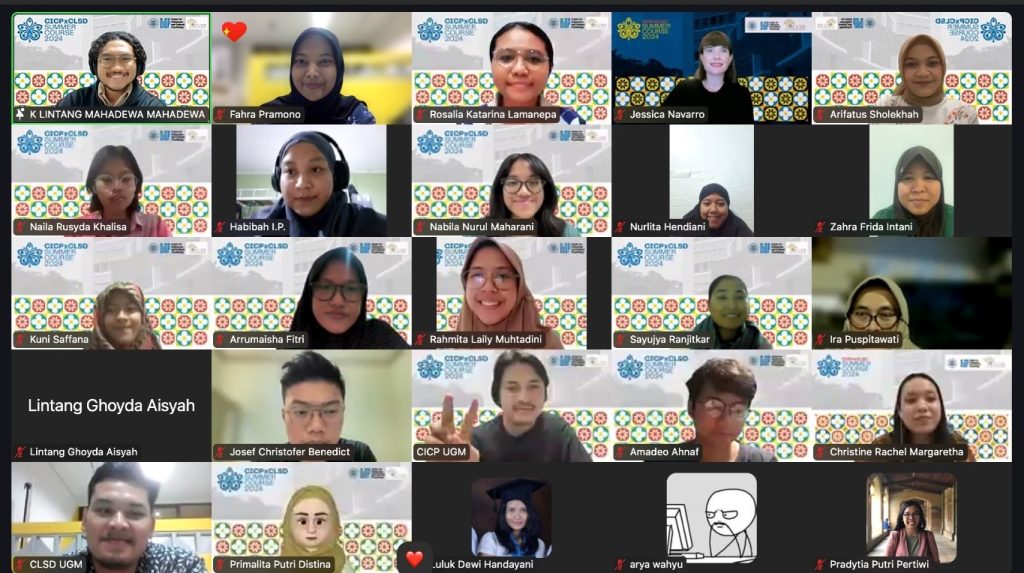
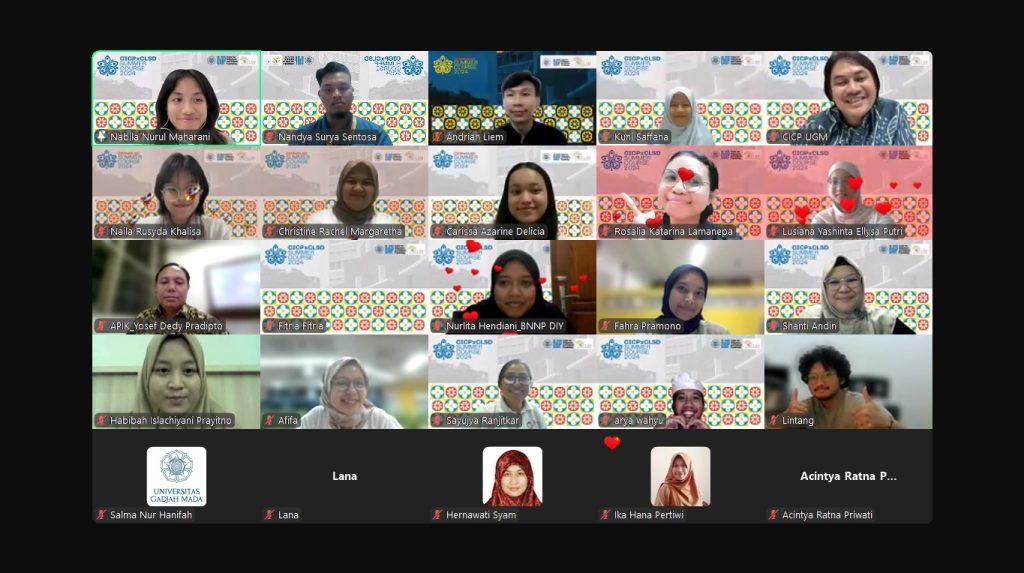
Collaborating with the Center for Indigenous and Cultural Psychology (CICP), the Center for Life-Span Development (CLSD) organized an international summer course program titled International Summer Course on Cultural Dynamics and Life-Span Development: Research Approaches and Practical Interventions. This summer course focuses on helping students gain an understanding of the role culture plays in life-span development as well as offering valuable insights into current research methodologies and approaches relevant to cultural and lifespan development. This event invites various speakers from Indonesia and all over the world with various backgrounds.

The last module, titled Thematic Explorations of Contextual Research and Intervention on Life-Span Development is unique compared to the other modules, the fact that it is divided into two sections; research, which explores the utilization of cultural and indigenous methodologies into life-span developmental research, and intervention, which talks about the significance of cultural considerations in interventions. Examples include; youth dynamics, addressing bullying, and the empowerment of older adults. The last module is constructed to fulfill Sustainable Development Goals (SDGs) such as Good Health and Well-Being (3), Quality Education (4) and Reduced Inequalities (10).

The seventh session was held on Friday, 27 September 2024, titled Social relations in the Javanese context by Prof. Faturochman, one of the lecturers in the Faculty of Psychology of Gadjah Mada University. This is also the first session of the last module. The session starts with Prof. Faturochman explains how the Javanese are divided into three classes; Santri, Abangan, and Priyayi. He then began to explain social-psychological relations, such as interpersonal, within group relations, and intergroup relations as well as explaining the aspects of relations, with emphasis on examples from Indonesia, such as Rukun (Harmony). After that, Prof. Faturochman explains a research that he did in 2018, which researches the multi-identity and relations of a local parliament member. He then continues the session by explaining the data results of his research. Just like other sessions, the session concludes with a Q & A.

Due to technical issues, the second session was postponed to a later date. The module continues with the third session, which was held on Tuesday, 1 October 2024 titled An Indonesian Indigenous perspective of life-span development by Mr. Ryan Sugiarto, one of the lecturers at Sarjanawiyata Tamansiswa University. The session begins with Mr. Sugiarto talking about Macapat, an Indonesian perspective on life-span development, specifically in Java. He also explains about the other Javanese perspectives on life-span development, with him mentioning that there are some that have three stages, some even have twelve. The session ends with a Q & A. 

The fourth session was held on Wednesday, 2 October 2024 titled Digital society and life-span development by Dr. Jessica Navarro from Elon University, the United States. The session begins with Dr. Navarro going over the basic information regarding Urie Bronfenbrenner’s theory, such as his background, why he created the theory, the development of the theory, and the criticisms of the earlier iterations of the theory. Dr. Navarro then explains one flaw in the older versions of the theory; that it didn’t include how technology can impact child and adolescent development. This is where she introduces the Neo-Ecological theory, an improved version of Bronfenbrenner’s theory, with technology and social media being considered as vital influences in each of the levels. She ends the session with explaining how artificial intelligence (AI) can be implemented into the Neo-Ecological theory. 

The fifth session was held on Thursday, 3 October 2024 titled Collaborative life-span development intervention by Dr. Sutarimah Ampuni, the head of CLSD and Dr. Yuni Hastutiningsih, a representative from The National Population and Family Planning Board (BKKBN) Yogyakarta. The session begins with Dr. Ampuni going over the basics of psychological intervention, such as the definition, stages, procedure, etc. She also explains Bronfenbrenner’s ecological theory. The session is then handed over to Dr. Hatutiningsih. She explains the general information on BKKBN, the policies, the efforts to achieve “Indonesia Emas 2045”, the programs that are available for the different life-span age groups. The session goes back to Dr. Ampuni, with her explaining the programs created with the collaboration between CLSD and BKKBN.

The sixth session was held on Monday, 7 October 2024 titled Research with children and youth in the context of migration by Dr. Roy Huijsmans, from Erasmus University Rotterdam, the Netherlands. The session starts with Dr. Huijsmans reviewing the exact meaning of child and youth. He then asks the students to take their time to answer questions regarding child and youth, specifically in relation to their age with certain behaviors. After that, he began explaining about agency in childhood and youth. Prof. Huijsmans then starts to talk about a case study he did in Laos about young people and migration. He explains that the concept of migration belongs in the youth stage of a person’s life-span. He ends the session with explaining the interventions that focus on the migrant youth of minority age. 

The seventh session was held on Tuesday, 8 October 2024 titled Empowering Older Adults by Prof. Elisabeth Schröder-Butterfill, from the University of Southampton, the UK. The session starts with Prof. Schröder-Butterfill asking the audience what ideas the students associate with older people. She then starts to explain the disengagement theory, in which withdrawal from society done by older individuals is a normal part of aging. Due to the negative connotations of the theory, Prof. Schröder-Butterfill then explains the successful aging theory. After that, Prof. Schröder-Butterfill starts to explain a program she worked on; Care Networks, which is situated in Indonesia, specifically in the regions of West Sumatra, Jakarta Yogyakarta, East Java, and the island of Alor in East Nusa Tenggara. Prof. Schröder-Butterfill concludes the session that despite the efforts of implementing elderly care in Indonesia, it’s still a major obstacle in the Indonesian healthcare system.  

The last session of this module was the postponed second session, held on Friday, 11 October 2024 titled Risk and resilience in developmental diversity: Learning from Deaf culture by Mr. Surya Sahetapy, from the Rochester Institute of Technology, the United States. This is also the final session for the international summer course. The session begins with Mr. Sahetapy explains the historical and social contexts of deaf culture, with one of the points being how it’s easier for hearing people to communicate with deaf people by ensuring that light is present and how rounded tables give deaf people an easier way to see everybody, thus ensuring better communication. Mr. Sahetapy then explains the risks faced by the deaf individuals, such as language deprivations, educational challenges, lower median earning, Mr. Sahetapy then ends the session with explaining how hearing people can become allies for deaf people.

After the session with Mr. Surya Sahetapy, a student-led conference was held on Monday, 14 October 2024. This conference has the students create a research proposal based off of the materials from the lectures as the course learning outcome.  With that, the International Summer Course on Cultural Dynamics and Life-Span Development: Research Approaches and Practical Interventions has ended, which ran from 17 September to 14 October 2024, with a total of 13 sessions, 14 speakers from 9 countries, and 47 participants from 5 countries. 

We want to give a huge thank you to our speakers for sharing their insights and knowledge on cultural dynamics and lifespan development. We would also like to thank our students for their active engagement, attendance, and thoughtful contributions during the sessions. We look forward to welcoming you at our future events! [MWK]

Module 2: Methods for Contextual Life-Span Development: Research and Intervention

Artikel Liputan KegiatanBlogEventSummer Course Tuesday, 19 November 2024

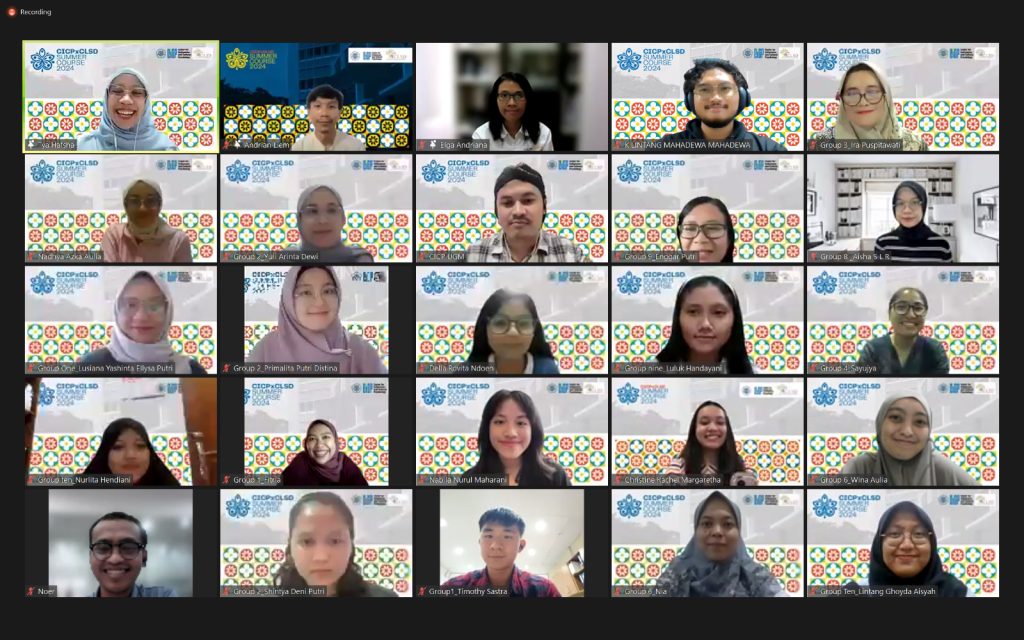
Collaborating with the Center for Indigenous and Cultural Psychology (CICP), the Center for Life-Span Development (CLSD) organized an international summer course program titled International Summer Course on Cultural Dynamics and Life-Span Development: Research Approaches and Practical Interventions. This summer course focuses on helping students gain an understanding of the role culture plays in life-span development as well as offering valuable insights into current research methodologies and approaches relevant to cultural and lifespan development. 

For this event, nine international speakers and five national speakers with various backgrounds and fields of expertise from various parts of the world, such as Denmark, Italy, Australia, Malaysia, and the United States are invited. This course is attended by 47 students, 43 from Indonesia and 4 from various countries such as Denmark, Germany, Nepal, and Australia. 

The second module, titled Methods for Contextual Life-Span Development: Research and Intervention dives into the methodologies used to research human development. Throughout the module, the students will explore various aspects of human development research, which includes the integration of cultural diversity and the usage of photovoice techniques. The second module is constructed to fulfill Sustainable Development Goals (SDGs) such as Quality Education (4).

The fifth session was held on Wednesday, 25 September 2024, titled Contextual action research in developmental psychology using Photovoice by Dr. Elga Andriana, one of the lecturers in the Faculty of Psychology of Gadjah Mada University. This is also the first session of the second module. The session starts with Dr. Andriana sending out a link for the students to upload a picture as well as writing a short description of the picture. Dr. Andriana then began explaining photovoice in general, which include defining what it is, the procedure of doing it, as well as the methods used to discuss the photos and the analysis process. After that, Dr. Andriana invites the students to give comments on a few photovoice findings from various projects revolving around photovoice. The session ends with a reflection and a Q & A session.

The sixth session was held on Thursday, 26 September 2024, titled Ethical practice in integrating life-span development research and intervention by Dr. Andrian Liem from Monash University Malaysia. The session starts with Dr. Liem emphasizing the importance of ethics in life-span development research and intervention. He then explains the four core ethical principles in psychology, such as having dignity, justice, fidelity, and beneficence, in which he also mentions various unethical psychological experiments throughout history as examples. The session continues with Dr. Liem explains the ethical guidelines, considerations, and decision-making  to life-span development research. The session also has a Q & A session in the end. The end of Dr. Liem’s session also marks the end of the second module of the International Summer Course. [MWK]

Module 1: Understanding Culture and Life-Span Development: Concept and Current Perspectives

Artikel Liputan KegiatanBlogEventSummer Course Tuesday, 19 November 2024

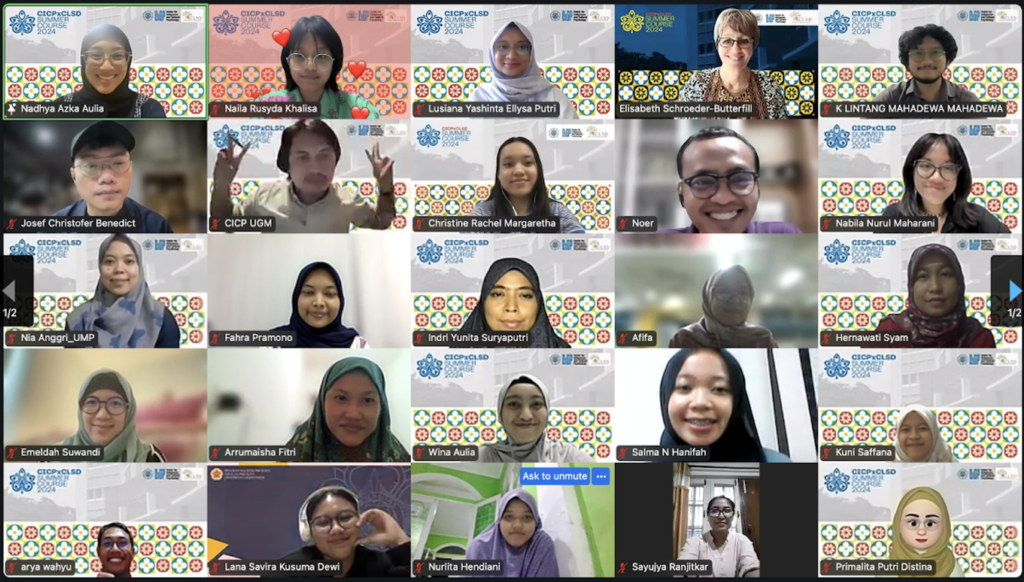
For a period of two months, the Center for Life-Span Development (CLSD) collaborated with the Center for Indigenous and Cultural Psychology (CICP) to organize a summer course event titled International Summer Course on Cultural Dynamics and Life-Span Development: Research Approaches and Practical Interventions. Collaborating with a panel of experts from Indonesia and around the world, this summer course focuses on helping students gain an understanding of the role culture plays in life-span development as well as offering valuable insights into current research methodologies and approaches relevant to cultural and lifespan development. 

We invited nine international speakers and five national speakers with various backgrounds and fields of expertise from various parts of the world, such as Denmark, Italy, Australia, Malaysia, and the United States. This course is attended by 47 students, 43 from Indonesia and 4 from various countries such as Denmark, Germany, Nepal, and Australia. 

The course is divided into 3 modules. The first module, titled Understanding Culture and Life-Span Development: Concept and Current Perspectives focuses on the paradigm of culture and how its context is correlated with today’s global conditions. It also focuses on the influence of the global north-global south paradigm, digital interactions as well as the climate crises on life-span development. The first module is constructed to fulfill Sustainable Development Goals (SDGs) such as Good Health and Well-Being (3), Quality Education (4) and Reduced Inequalities (10).

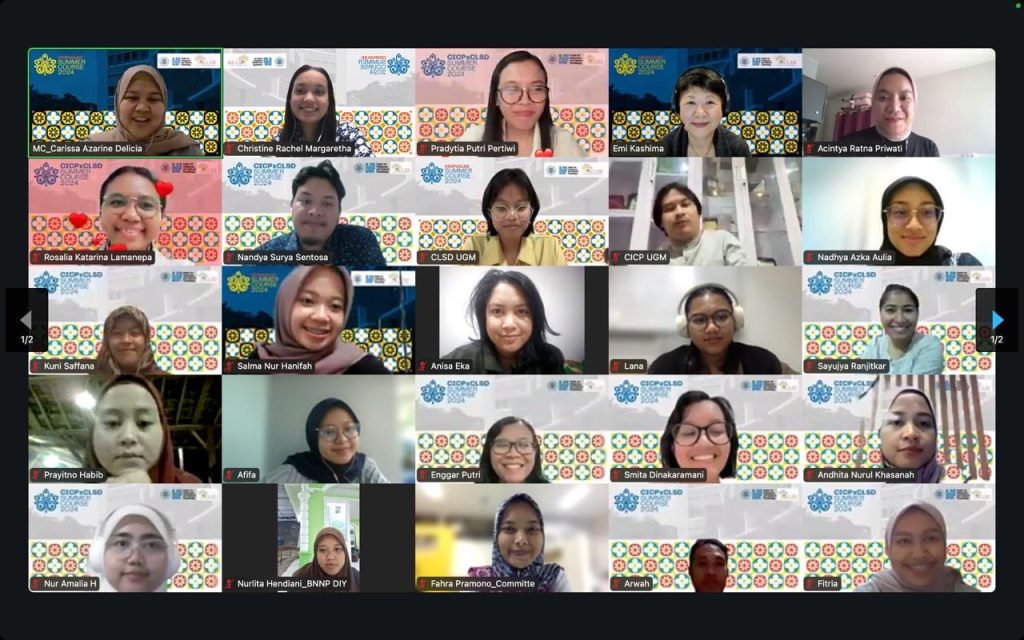
The first session of the first module was held with both an online and offline session on Tuesday, 17 September 2024. The event was carried by the Master of Ceremony of the session, Christine Rachel Margaretha and opened by Rahmat Hidayat, S.Psi., M.Sc., Ph.D., who is the dean of the Faculty of Psychology. The session begins with an introductory video on the profiles of CLSD and CICP, followed by the main event, a lecture carried out by Prof. Jaan Valsiner from Aalborg University, Denmark and Prof. Giuseppina Marsico from the University of Salerno, Italy on the topic of Redefining Culture in current context. Prof. Valsiner starts with debunking the 4 gaps of existing thinking in psychological science. After explaining the gaps, he then explains the new aspects of a “new general psychology”. He then emphasizes that researchers often use a two-dimensional method to explore the human mind, in which he uses a new method, shaped after a kleinian geometry to illustrate it. The rest of the material is then explained by Prof. Marsico, in which she explains the cultural psychology of the bordering process. The session ended with a Q & A session. 

The second session was conducted with both an online and offline session the next day, with the speakers still the same but with a different topic; (Global North–Global South) culture interactions and how it shapes life-span development. Prof. Valsiner starts this session by arguing that psychology in general needs more data. He then began explaining the important features of the methodology cycle. Examples include basic assumptions, or meta-codes, which are used to build theories, such as the assimilation theory and the proculturation theory. He also tells the students that research needs more “doubt”, which is done to reduce enforced fixed opinions. Prof. Marsico continues the lecture by explaining the Global North-Global South culture interactions and why it is important. The session ends with Prof. Valsiner & Prof. Marsico explaining their project proposal called “The Global South Network of Cultural Psychology”.

The third session was conducted on Thursday, 19 September 2024 with the topic Polyculturalism in understanding lifespan development in current society by Prof. Emiko Kashima from La Trobe University, Australia. The session started with Prof. Kashima explains Lay cultural theory and diversity ideologies, such as polyculturalism. After that, she starts to dissect the exact meaning of culture, specifically focusing on how cultural influences are “selected” through different cultural traditions. Prof. Kashima also elaborates on the topic of multiculturalism, specifically its benefits, differences, limitations, etc. The session continues with Prof. Kashima explaining cultural identity. The session ends with Prof. Kashima showing the correlation between polyculturalism and cultural identity. 

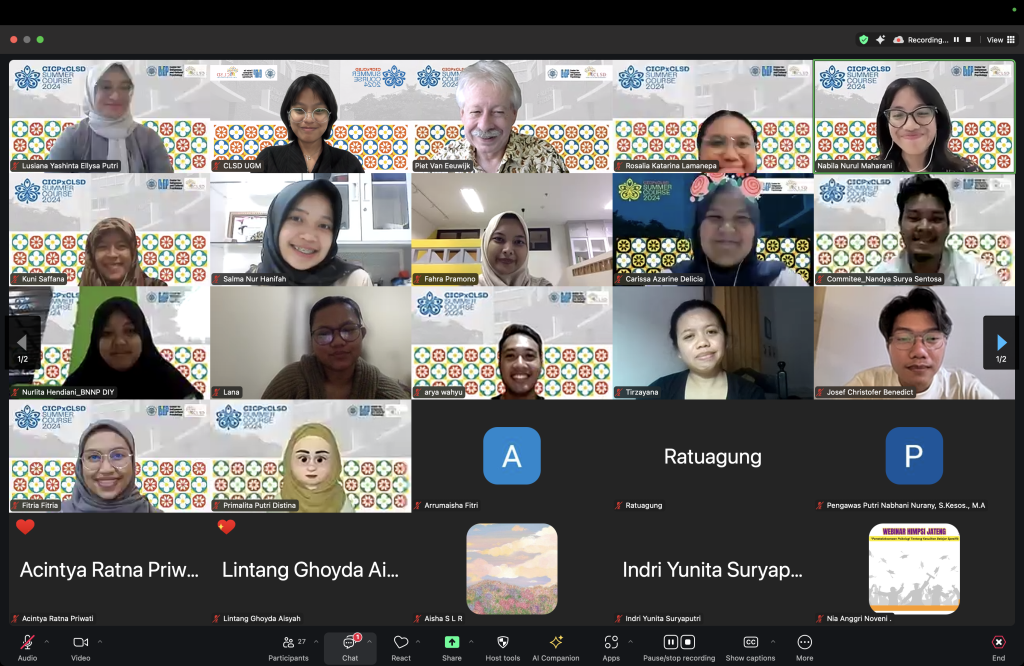
The final session of this module was held on Friday, 20 September 2024 with the topic A critique of life course intervention by Prof. Peter van Eeuwijk from the University of Basel, Switzerland. He starts the session by critiquing the definitions of lifespan and intervention. He also critiques the World Health Organization’s conventional life course model. Prof. Eeuwijk also mentions his experience using longitudinal and transversal research methodologies. During the session, Prof. Eeuwijk asks the students what is the most important factor on life quality. He ends the session by explaining about vulnerability, resiliency, and agency by using case studies. The end of Prof. Eeuwijk’s session also marks the end of the first module of the International Summer Course. [MWK]

1234…7

Recent Posts

  • CLSD UGM Merefleksikan Prestasi Melalui CLSD End of Year Party 2025: Festival Dangdut Pantura
  • Rahasia Bahagia Lansia: Senior School Ungkap Caranya!
  • Semarak The Reading Buddies: On the Go, Tanam Minat Literasi sejak Usia Dini
  • Peduli Isu Disabilitas, International Dental Summer Course 2025 Soroti Layanan Kesehatan Inklusif
  • Festival Hari Anak 2025: Bertumbuh, Belajar, dan Sehat Mental bagi Anak di Era Digital
Universitas Gadjah Mada

Center for Life-Span Development (CLSD)
D-602, Fakultas Psikologi, Universitas Gadjah Mada
Jalan Sosio Humaniora Bulaksumur, Yogyakarta, Indonesia 55281
clsd.psikologi@ugm.ac.id

© Universitas Gadjah Mada

KEBIJAKAN PRIVASI/PRIVACY POLICY